You've probably used ChatGPT, Gemini, or Claude to answer a question or help you write something. You type, it responds. Simple enough.
But something bigger is quietly happening in the background. A new kind of AI is emerging - one that doesn't just answer questions. It takes action.
It's called agentic AI, and it's worth understanding before it starts showing up in every tool you use.
So What Exactly Is Agentic AI?
The word "agentic" comes from agency - the ability to act independently toward a goal.
Regular AI is reactive. You ask, it answers. It waits for you to do something next.
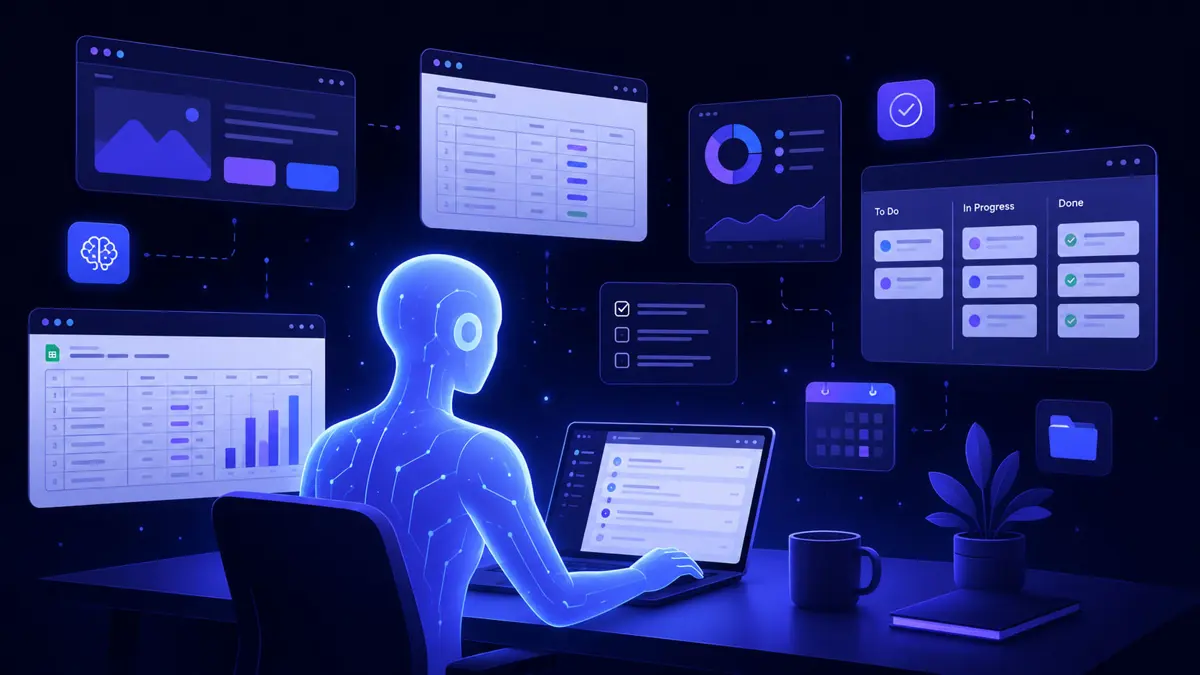
Agentic AI is different. You give it a goal, and it figures out the steps, executes them one by one, checks its own progress, and adjusts when something doesn't work. It doesn't wait for you to hold its hand through every step.
Think of it like the difference between a search engine and a personal assistant. One gives you links. The other actually does the research, books the meeting, and sends the follow-up email.
A Simple Example
Say you tell an agentic AI: "Research the top 5 project management tools, compare their pricing, and put it in a spreadsheet."
A regular AI gives you a wall of text and you do the rest.
An agentic AI opens a browser, visits each website, pulls the pricing data, creates the spreadsheet, and hands it to you - done.
That's not science fiction. That's happening right now with tools like Claude's computer use, Microsoft's Copilot agents, and products being built on frameworks like LangChain and AutoGen.
Why This Is Different From What Came Before
Every few years, AI gets a new label - machine learning, deep learning, generative AI. Most of it felt distant from everyday life.
Agentic AI feels different because it closes the gap between "AI can help with this" and "AI just did this."
The earlier wave of generative AI was impressive but passive. It could write your email draft, but you still had to send it. It could suggest a plan, but you still had to execute it.
Agentic AI removes that gap. And when that gap closes, the way we work starts to shift — quietly at first, then all at once.
Where You'll See It First
Agentic AI is already showing up in a few places worth watching:
Customer support - AI agents that don't just reply to tickets but actually look up your order, process a refund, and update your account without a human involved.
Software development - Tools like GitHub Copilot are evolving from autocomplete to agents that can write, test, and debug entire features.
Research and analysis - Agents that can browse the web, pull data from multiple sources, and synthesize a report in minutes.
Personal productivity - Early tools that can manage your inbox, schedule meetings, and draft responses based on context it remembers about you.
None of this is perfect yet. Agentic AI still makes mistakes, gets confused, and needs supervision. But the direction is clear.
The Part Most People Miss
The most important thing about agentic AI isn't the technology. It's what it means for how work gets done.
For most of human history, if you wanted something done, you either did it yourself or paid someone else to do it. Agentic AI introduces a third option - delegate it to software that can actually carry it out.
That changes the math on a lot of things. Small teams can move like large ones. Individuals can punch above their weight. Tasks that weren't worth doing because they took too long suddenly become viable.
The people who figure out how to work with agentic AI early - how to direct it well, verify its output, and build workflows around it - are going to have a real advantage over those who don't.
What's Coming Next
Right now, most agentic AI still needs a human in the loop. You set the goal, it works toward it, you check the result.
The next step - already being researched - is multi-agent systems. Multiple AI agents working together, each with a specialty, handing tasks off to each other the way a team of people would.
Imagine one agent that handles research, one that writes, one that fact-checks, and one that formats and publishes - all coordinated automatically. That's not the distant future. Early versions of that exist today.
We're at the beginning of a shift that's going to look obvious in hindsight. The question isn't whether agentic AI will change how work happens. It's whether you'll be ahead of it or catching up.
This is the first post on Saganote. We cover AI, technology, and what actually matters about both — without the hype and without dumbing it down. If that sounds useful, stick around.