#AI Tools
 AI
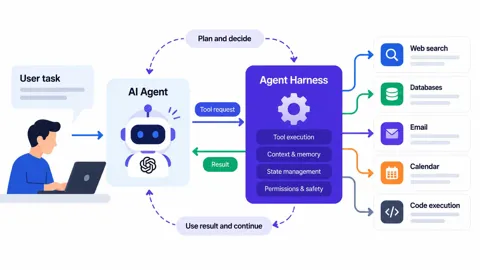
What Is an AI Agent Harness? How It Works and Why It Matters
An AI agent harness connects a model to tools, context, execution, and safety controls. Here is how it works and why reliable agents need it.
 AI
Jev Becomes Vercel’s Fastest-Adopted AI Model: What Developers Should Know
Jev became the fastest-adopted model in Vercel AI Gateway history, reaching 35.3% of paid teams in two weeks. Learn what Jev does, why developers are trying it, and what adoption data does and does not prove.
 AI
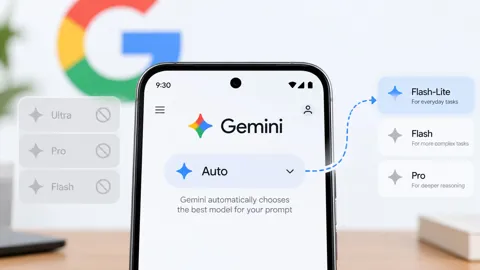
Google’s Gemini Auto Change Limits Model Choice for Free Users
Google’s Gemini Auto model selection removes manual model switching for free users, while new thinking levels give people another way to adjust responses.
 AI
Claude Haiku 5.5 Is Fast and Cheap. That Matters More Than Its Benchmarks
Claude Haiku 5.5 is built to make routing, summaries, subagents, browser tasks, and high-volume agent work cheap enough to run at scale.
 AI
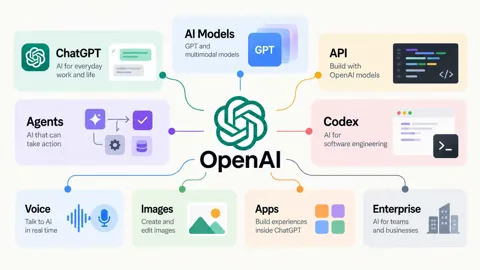
What Does OpenAI Do? A Complete Guide to ChatGPT, Models, APIs, Agents, and Codex
What Does OpenAI Do? This guide explains how OpenAI's models, ChatGPT, APIs, agents, Codex, tools, voice, images, and apps fit together for readers.
 AI
OpenAI Adds Invisible Watermarks to ChatGPT Text in the EU for AI Provenance
OpenAI text watermarking is coming to eligible ChatGPT and Codex output in the EU, using textGrain to add a machine-detectable provenance signal.
 AI
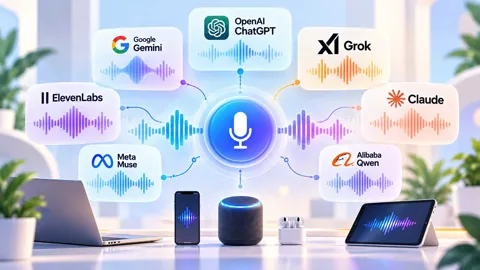
Voice AI Models Explained: How They Work
Voice AI is moving beyond dictation. Learn how voice models hear, reason, speak, and use tools, with ChatGPT, Gemini, Grok, Claude, ElevenLabs, and Qwen.
 Apps
Instagram Edits Gets an AI Assistant to Suggest What to Make Next
Instagram’s Edits app is getting an AI assistant that can analyze creator performance data and suggest ideas, scripts, captions, and content strategies.
 AI
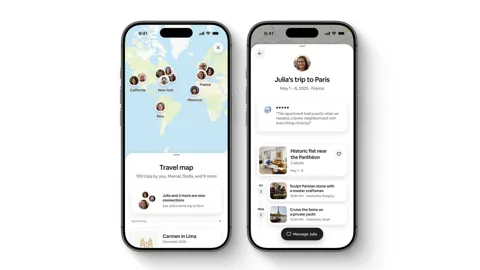
Airbnb AI Search Adds Social Trip Discovery and Smarter Planning
Airbnb AI search lets travelers use natural language or voice to find homes, experiences, services, while social features surface recommendations from friends.
 AI
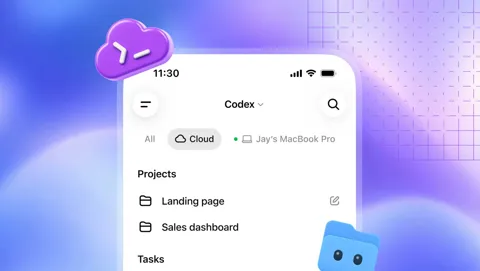
How Codex Cloud Reusable Environments Work Across Your Devices
Learn how Codex Cloud reusable environments package repositories, tools, dependencies, and access settings so cloud coding tasks can continue across devices.
 AI
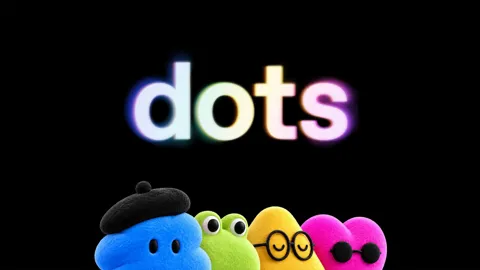
OpenAI Dots Bring Always-On AI Agents to ChatGPT Work
OpenAI Dots are persistent AI agents powered by GPT-6 Astra that can work across connected apps, use a cloud computer, and continue tasks over time.
 AI
OpenAI Launches GPT-6.1 Sol With Near-Astra Performance at Lower Cost
OpenAI launched GPT-6.1 Sol as a cheaper model for coding and professional work, with near-Astra performance and API pricing set far below GPT-6 Astra.