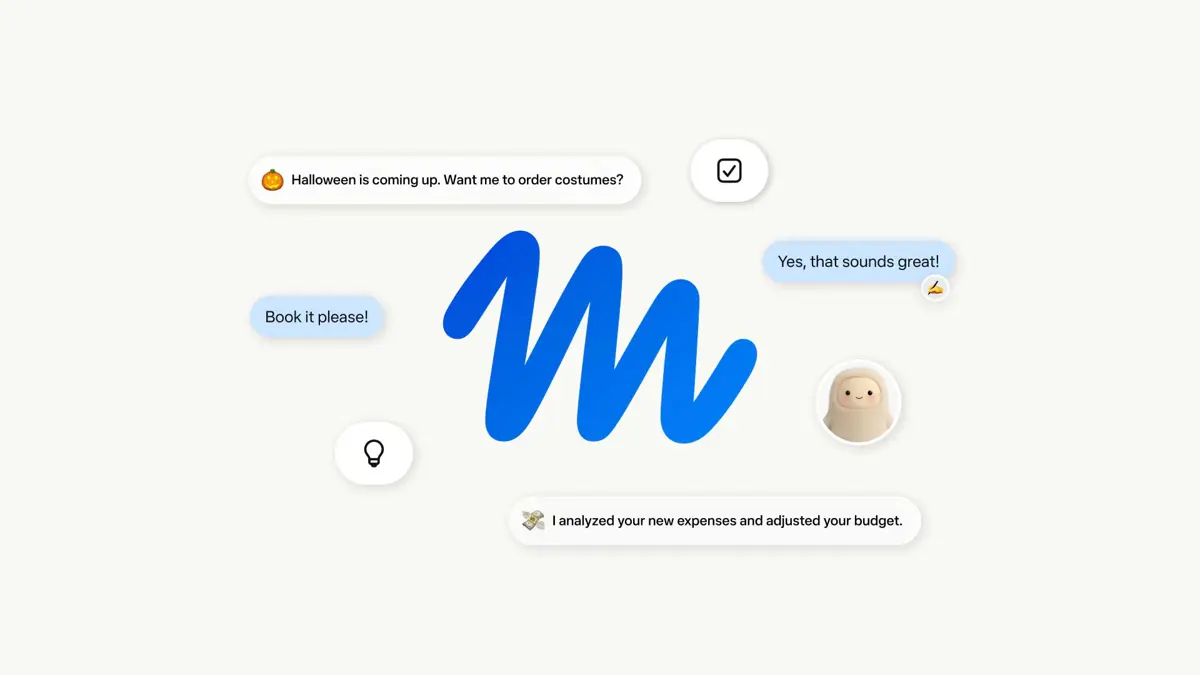
Meta Muse is a personal AI agent that takes on tasks and long-running goals on a user's behalf - booking travel, sending email, filling out forms, and making purchases - while continuing to work in the background after the app is closed. Launching today in the US on iOS, Android, and muse.ai, Muse is powered by Muse Spark, Meta's model built specifically for real-world agentic work. Unlike a chatbot that waits for the next message, Muse keeps moving on a goal and returns when something needs approval or when a situation changes.
Takeaways
- Meta Muse is a personal AI agent that handles tasks, goals, purchases, and multi-step workflows on a user's behalf
- Runs on Muse Secure VM - a dedicated cloud computer per user; no other agent can access it
- A separate Sentinel agent must approve every outbound action - Muse cannot send an email or make a purchase without user or Sentinel sign-off
- Muse has zero visibility into passwords or payment details - credentials go into secure storage only
- Payments via Link by Stripe, with one-time-use cards; Link purchase protections apply - the first AI agent to offer this coverage
- Shop Pay and 1Password support coming soon
- Free for most use cases; subscription plans available for heavier use
- Launching in the US; coming to AI glasses; Muse Confidential VM (fully user-encrypted) coming later in 2026
Muse Runs on Its Own Dedicated VM in the Cloud
Most AI agents run inside a shared app environment. Meta Muse runs on Muse Secure VM - a dedicated virtual machine in the cloud assigned to each user individually. Every app connection, credential, and conversation lives inside that VM. Nothing from one person's Muse can reach another user's agent. When a person grants Muse access to email, those credentials go into secure storage inside the VM - Muse can use them to send a message but cannot read the password. The same applies to payment details, which are never visible to Muse in plain text. Meta Muse Code launched in August as an AI coding agent for large codebases using the same Muse Spark model foundation; the Secure VM architecture extends that infrastructure to the full personal agent.
Muse Confidential VM, arriving later in 2026, will go further: the entire VM - conversations, data, and agent state - will be encrypted with a key only the user holds. At that point, not even Meta can read what is inside. The standard Secure VM launching today already keeps Muse data out of Meta's ad systems and gives users an opt-out on using their conversations for model training.
A Sentinel Agent Gates Every Action Before It Reaches the Internet
Each Muse Secure VM runs a second agent alongside Muse: the Sentinel. Meta keeps the Sentinel and Muse separated at the system level - the Sentinel approves every outbound action before it happens. Muse cannot send an email, make a purchase, or submit a form without passing through Sentinel's filter first. For sensitive actions - anything involving money or communications sent on the user's behalf - Muse also checks with the user directly before proceeding. Every action Muse has taken or plans to take is visible in a full audit trail inside the app. For most users, the question of whether to trust an AI with email and payments comes down to architecture - and Meta's answer is a separate gatekeeper that cannot be bypassed, not just a trust policy.
Users set the access scope per app. For email, choices range from read-only to send-on-your-behalf. Connecting to a calendar or a service can be revoked at any time. Muse also remembers context across conversations - a dietary restriction mentioned once, a preference noted in passing - and users can instruct it to forget specific things it has learned.
Stripe Link Handles Payments - With Purchase Protections
Muse is the first AI agent covered by Link's purchase protections through Stripe. When Muse checks out on behalf of a user, Link generates a one-time-use virtual card for that transaction - the real card number is never exposed to the merchant or to Muse. Link's protections cover damaged or lost items, price drops, no-fee returns, and return guarantees on eligible purchases. Shop Pay integration is coming soon, along with 1Password support so Muse can use logins a person has already saved. Meta launched Muse Voice Dictation for Mac in September to expand Muse's input modes - voice, text, and now agentic action on the same platform.
Muse is free for the core feature set. Subscription plans unlock higher limits for users who want the agent running on more complex or longer-horizon tasks. Meta has not published pricing tiers yet for the paid plans. Muse Image launched in July as an image generation tool built into WhatsApp and Instagram - the Muse personal agent is a larger bet, giving that same platform a way to act in the world rather than just generate content inside it.