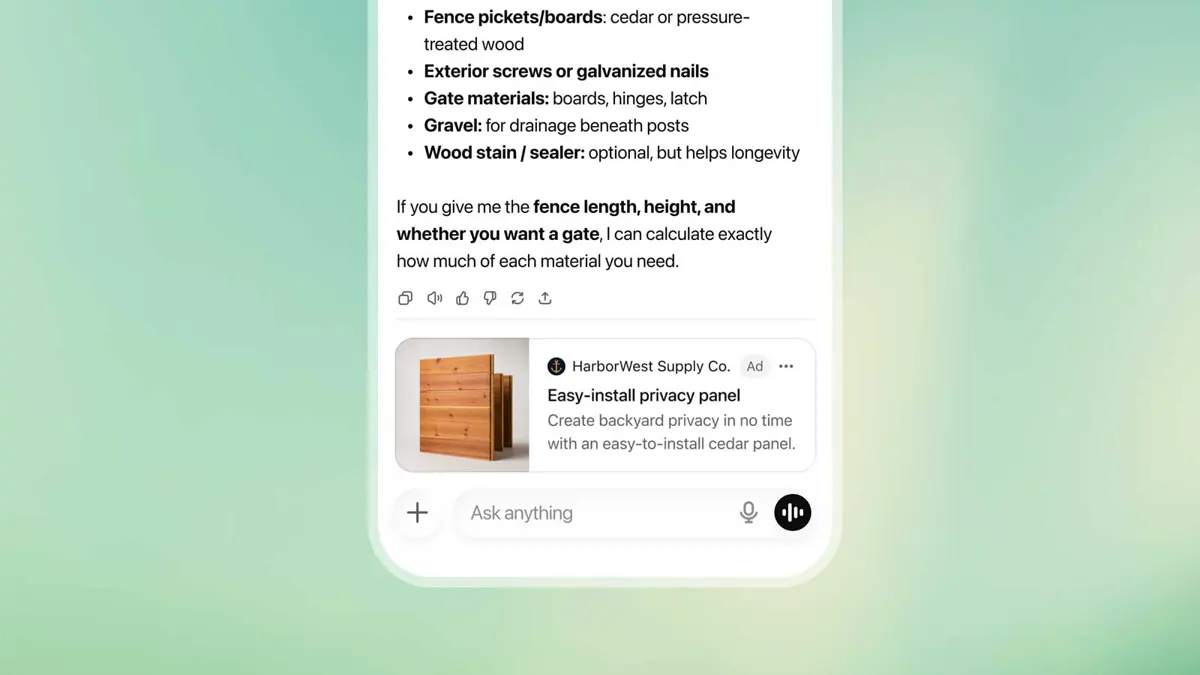
ChatGPT visual ads will turn one of ChatGPT's most visual experiences into a new advertising surface. OpenAI says it will begin testing ads alongside image generation in the U.S. later this month, with the ads clearly labeled and kept separate from the image being created. Advertising will not influence the answers ChatGPT provides.
The change matters because OpenAI is no longer treating ChatGPT advertising as a simple text-ad placement. The company is building an ad system around the way people explore ideas, compare options, and decide what to buy, and image generation gives that system a natural place to show products visually.
The ads will sit beside the generated image
OpenAI describes the new format as a way for brands to show product inspiration, product usage, or the experiences their services enable. The first test will run during image generation, but the ad itself will remain separate from the generated result.
That separation is an important part of the format. A generated image should not look like it was created or altered because an advertiser paid for placement. OpenAI says its advertising does not influence ChatGPT's answers, while its ads site also says ads remain distinct from responses.
OpenAI says visual ads will be clearly labeled and remain separate from the image being created. The company also says advertising does not influence ChatGPT's answers.
Image generation gives OpenAI a different kind of ad surface
Traditional search advertising often starts with a keyword and a page of results. ChatGPT's approach is built around conversation and intent. OpenAI's advertising platform describes the environment as one where people explore options, compare choices, and make decisions while sharing more context about what they want.
Image generation adds another layer. A request for a room makeover, a new outfit, a product concept, or a travel scene can carry visual intent that is harder to express through a conventional keyword alone. OpenAI's new format is designed to let advertisers respond to that kind of intent with imagery.
The timing also follows a broader expansion of ChatGPT's image tools. ChatGPT Images 2.5 is designed around faster generation and more precise editing, while ChatGPT Virtual Try-On shows how OpenAI is already using image generation for product discovery and shopping.
OpenAI is building a larger advertising platform
The visual format is only one part of the announcement. OpenAI is also expanding measurement integrations so advertisers can connect conversion data from existing systems to ChatGPT Ads. The company named Hightouch, Tealium, and LiveRamp as new integration partners and said it is continuing to develop attribution, incrementality, and brand-measurement options.
OpenAI's broader advertising push is already large enough to have its own business story. The company said ChatGPT Ads reached a $1 billion annualized revenue run rate in August, with tens of thousands of advertisers using the platform.
OpenAI is also experimenting with Sponsored Agents, which can start a conversation with a business-sponsored agent after someone clicks an ad. That points toward an advertising system that can extend beyond a display unit into a conversational interaction.
The shopping connection is getting stronger
The new format arrives only days after OpenAI expanded ChatGPT's shopping capabilities. Its virtual try-on feature lets people visualize clothing and accessories, while Favorites gives shoppers a way to save products for later.
That makes the image-generation ad test easier to understand. OpenAI is placing advertising next to an experience that can already help people visualize products, rather than creating a completely separate shopping destination.
The company is also building other business-focused capabilities around ChatGPT. Its Data Agent turns questions into Power BI and Tableau dashboards, showing how ChatGPT is increasingly being used as a place where users move from a question to a concrete outcome.
Who will see the new visual ads?
| Detail | Current plan |
|---|---|
| Initial market | United States |
| Timing | Later in October 2026 |
| Format | Visual ads alongside image generation |
| Advertisers | Initial test group |
| Labeling | Clearly labeled |
| Generated image | Remains separate from the ad |
| ChatGPT answers | Advertising does not influence answers |
OpenAI's Help Center says ads are not shown to users on Plus, Pro, or Business plans, or to accounts identified as belonging to users under 18. ChatGPT pricing also shows how paid plans fit into the wider product lineup. The new visual format is initially a U.S. test, so its wider availability is still to be determined.
OpenAI has also published advertising policies covering sensitive contexts and brand-safety restrictions. Those policies are part of the company's attempt to keep ads away from conversations where commercial placement could undermine trust or create an inappropriate experience.
The bigger change is how ChatGPT could become an ad destination
The visual ad test gives OpenAI another way to connect commercial intent with the conversational interface. The important shift is not simply that an image generator can display an ad. It is that the same product can help someone explore an idea, visualize an option, compare products, and potentially encounter a sponsored brand during that process.
That creates a clear boundary OpenAI will need to maintain. The more advertising is placed inside high-intent ChatGPT experiences, the more important it becomes that users can tell where the assistant ends and paid placement begins.
For now, the visual format remains a test in the United States. OpenAI says the ads will be labeled, separate from generated images, and independent of ChatGPT's answers. The test will show whether that distinction can hold up as OpenAI expands its advertising platform.
Frequently Asked Questions
What are ChatGPT visual ads?
When will OpenAI test visual ads?
Will the ad change the image ChatGPT generates?
Will ads influence ChatGPT's answers?
OpenAI's official announcement is available on its ChatGPT advertising update, and businesses can learn more through OpenAI Ads.