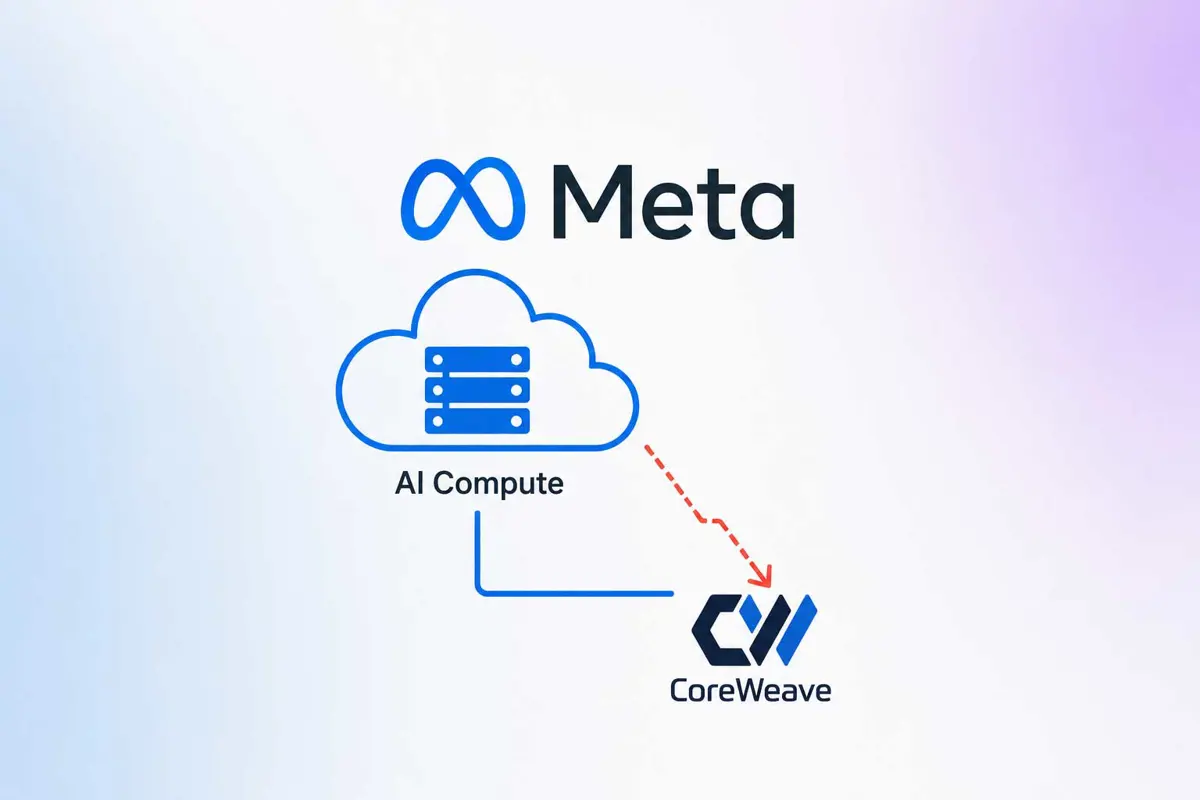
Meta is entering the cloud computing market. Bloomberg reported July 1 that Meta plans to launch a cloud business selling access to its surplus AI infrastructure - a move that sent Meta stock up roughly 10%, adding about $149 billion in market value in a single session. CoreWeave fell 13.7% on the news. Nebius dropped 15.6%. Both companies hold multi-billion-dollar contracts to supply Meta with the very compute Meta now intends to sell to others.
Two Products: Model Access and Raw GPU Cycles
Meta Compute - the internal name for the business - has two offerings under consideration. One mirrors Amazon's Bedrock model: selling hosted access to AI models, including Meta's own Muse Spark, to outside companies via API. Raw GPU compute is the second option, similar to what CoreWeave and Nebius sell today - companies rent infrastructure by the hour without needing a managed model on top.
Neither product has a price, a launch date, or a public product page. Bloomberg's reporting cites people familiar with the plans, and Meta has not issued a press release or formal announcement. Mark Zuckerberg gave the clearest public signal in late May, telling investors that entering the cloud business was "definitely on the table."
CoreWeave and Nebius Hold $48 Billion in Contracts With Meta
CoreWeave signed a $21 billion compute supply contract with Meta. Nebius signed a deal with Meta worth up to $27 billion. Both companies exist largely to supply the kind of GPU infrastructure that Meta now says it has enough of to sell back to the market - and that fact alone explains why both stocks collapsed within hours of the Bloomberg report.
Meta having excess compute to sell carries a second implication that markets moved on fast. Surplus capacity implies Meta may slow its AI infrastructure spending going forward. Investors have punished hyperscalers throughout 2026 for their ballooning capex bills with no clear return timeline - so any signal that Meta's outlays might ease sent the stock higher. For the firms banking on continued Meta demand, that same signal is a direct threat to their forward revenue models.
A Cloud Business Does Not Automatically Mean Less Spending
Google cut off Meta's access to Gemini models in May due to its own compute constraints. Meta building its own cloud avoids that dependency problem entirely - but selling cloud capacity at scale requires maintaining that excess capacity, which is not a natural path to lower capex. CoreWeave's own business is a bet on AI compute demand never shrinking. Meta entering that same business is a bet on the same thing. Agentic infrastructure demand from developers - the likeliest first buyer of Meta Compute - is still accelerating.
Meta has not set a timeline for Meta Compute, named a launch date, or confirmed whether it will offer both products or only one.