NASA Roman Telescope Sets August Launch - Aimed at 100,000 Exoplanets
Launching eight months ahead of schedule on a SpaceX Falcon Heavy, Roman carries a field of view 100 times wider than Hubble.

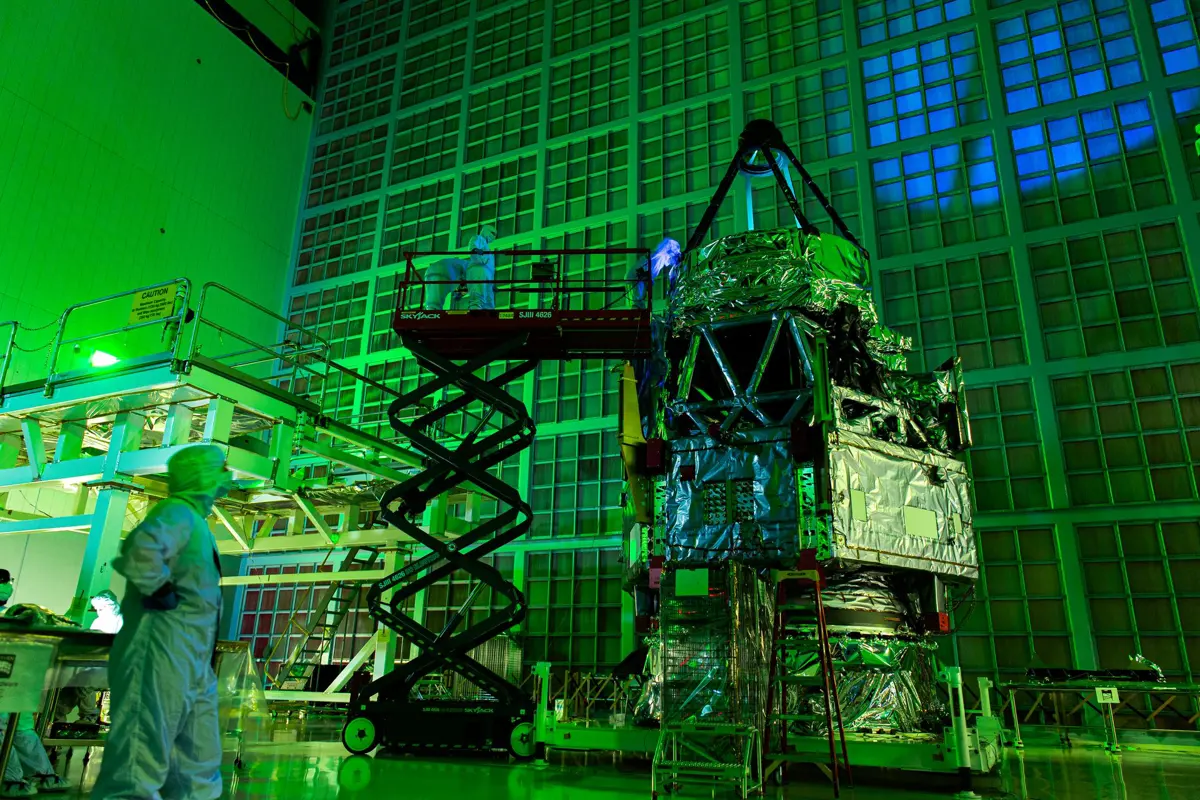
NASA Roman Space Telescope is set to launch August 30, 2026, on a SpaceX Falcon Heavy - eight months ahead of its original schedule. Scientists expect Roman to detect up to 100,000 exoplanets, compared to the roughly 6,300 confirmed by all missions to date.
Roman Launches on SpaceX Falcon Heavy - Eight Months Early
NASA awarded SpaceX a $255 million contract to carry the fully assembled telescope to orbit. Roman will park at the Sun-Earth L2 gravitational point - the same location as the James Webb Space Telescope - about 1.5 million kilometers from Earth.
Manufacturing and integration wrapped ahead of plan. Final pre-launch checks are scheduled through July, with launch targeted for August 30.
Roman's Field of View Is 100 Times Wider Than Hubble's
Where Hubble captures a narrow slice of sky at a time, Roman surveys wide fields in a single shot. Its infrared camera covers a patch of sky 100 times larger than Hubble's, enabling surveys of the galaxy at a scale no previous space telescope has attempted.
Scientists plan to scan the galactic bulge - the dense core of the Milky Way - every 15 minutes, watching for brief flickers of starlight caused by planets drifting between Earth and distant stars. That method, called gravitational microlensing, can detect worlds that orbit too far from their host stars to appear in other surveys.
100,000 Exoplanets - Including Worlds With No Star
About 6,300 exoplanets have been confirmed across all missions combined. Roman's microlensing survey is expected to push that number past 100,000.
Among the targets are rogue planets - worlds ejected from their original solar systems that now drift through the galaxy without a host star. Roman can also directly image some exoplanets using a coronagraph, a tool that blocks starlight to reveal nearby orbiting objects. NASA describes the coronagraph as a technology demonstration, testing whether the method can work at the sensitivity levels required for future direct-imaging missions.
Dark Energy Is Roman's Other Mission
Exoplanet hunting is one half of Roman's science agenda. Roman is also built to study dark energy - the force thought to be driving the universe's accelerating expansion - by mapping how galaxy clusters are distributed across billions of light-years.
NASA positions Roman as a complement to Webb, not a replacement. Webb goes deep and narrow. Roman goes wide. Combined, the two telescopes cover observational strategies that neither could handle alone.
NASA has not released a date for first science data. Whether Roman hits its August 30 window depends on final pre-launch checks through July.