TL;DR
- ChatGPT for Teens is rolling out globally to eligible users ages 13 to 17. The experience adds age-appropriate safety protections, learning-focused tools, study features, and optional parental controls while keeping the core ChatGPT experience available for learning, creativity, and everyday questions.
- OpenAI has launched ChatGPT for Teens as a dedicated experience designed around the needs of younger users. The rollout begins August 18 for eligible teen accounts on free and paid personal ChatGPT plans, with availability expanding over the coming weeks.
What Is ChatGPT for Teens?
ChatGPT for Teens is not a separate chatbot with a completely different set of capabilities. Instead, OpenAI is adding additional protections, settings, and learning-focused features to the existing ChatGPT experience for users identified as being under 18.
The goal is to give teenagers a way to use ChatGPT for studying, exploring ideas, creating content, and everyday questions while adding safeguards designed specifically for younger users.
OpenAI says the teen experience includes age-appropriate protections intended to reduce exposure to sensitive or potentially harmful content. It also adds reminders that encourage balanced use and make clear that ChatGPT is an AI tool.
Not every student has someone at home who can help when they get stuck or have questions with their homework. With the right guardrails, AI can help fill that gap. Tools like Responsible Homework Reminder can guide students step by step, helping them understand their mistakes, build confidence, and keep learning—not simply hand them an answer. That kind of individualized support can make a meaningful difference for students who want to succeed but don’t always know how to move forward.
Racquel Gibson, high school math teacher, Miami, FL
ChatGPT Adds More Learning Tools for Teens
Learning is one of the main areas OpenAI is emphasizing with the new experience.
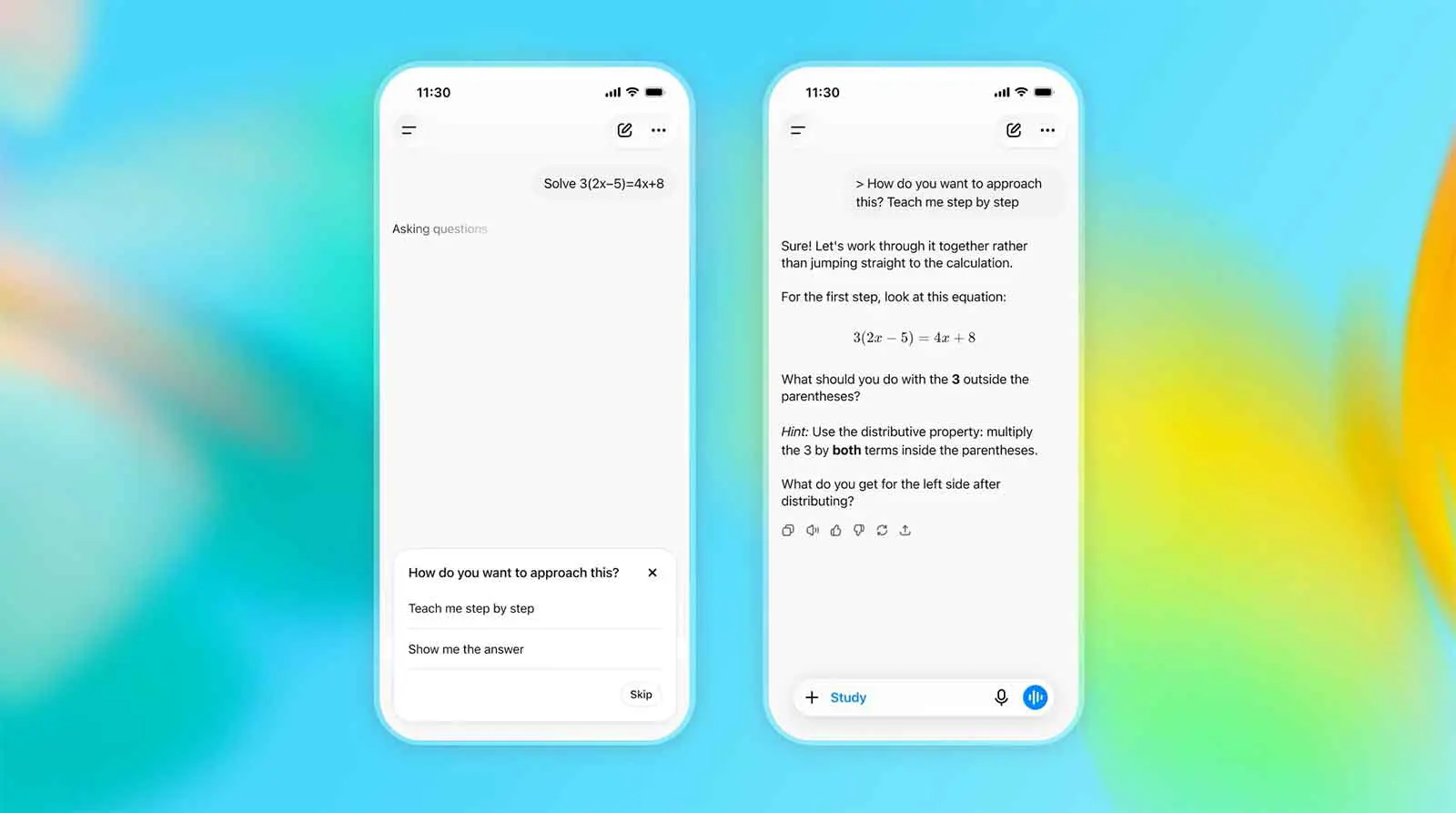
ChatGPT for Teens includes learning-focused starter prompts that can help users begin studying, practice skills, or explore a topic. Study Mode can also provide hints, step-by-step guidance, follow-up questions, and knowledge checks rather than simply giving an answer immediately.
The experience can also provide homework reminders that encourage students to use Study Mode and work through assignments step by step.
OpenAI is also adding learning tools such as quizzes when available, giving students another way to practice material and check their understanding.
These additions build on ChatGPT's broader move toward education and learning tools rather than treating the chatbot only as a general-purpose question-and-answer service.
Study Hours Can Encourage More Focused Use
ChatGPT for Teens also introduces Study Hours, which can be configured by the teen or a linked parent or guardian.
During those hours, eligible new chats can start in Study Mode. The feature does not block access to ChatGPT, but it can help make study-focused use the default during a scheduled period.
The experience can also show reminders encouraging teens to take breaks. OpenAI says some image uploads may also trigger a reminder asking users to check for sensitive information before sharing it.
These features are intended to encourage more balanced use rather than simply maximizing the amount of time teenagers spend with ChatGPT.
Parents Can Link Their Accounts
Parents and guardians can optionally connect their accounts to a teen's ChatGPT account through Parental controls.
The controls allow parents to manage selected settings, including Study Hours and Quiet Hours. Quiet Hours can limit access to ChatGPT during scheduled periods.
Parents do not receive access to the teen's conversations through these controls. OpenAI says parents cannot read or monitor their teen's chats.
In limited situations involving safety notifications, OpenAI says it shares only the information needed to help support the teen's safety.
OpenAI Is Using Age Detection
ChatGPT for Teens does not require users to manually switch on a special teen mode.
OpenAI says it uses account-provided age information, verified age, or age prediction to determine whether an account is eligible for the teen experience. When an account is identified as belonging to someone under 18, ChatGPT can automatically enable the teen-specific experience.
This approach is important because simply asking users to select their age would not provide a reliable way to protect younger users.
If an adult is incorrectly placed into the teen experience, OpenAI provides an age-verification process that can be used to correct the account's status.
Why ChatGPT for Teens Matters
The launch comes as ChatGPT is becoming a much larger part of how people learn, work, and interact with AI.
Our coverage of ChatGPT's massive user base can provide more context on how widely the service is already being used.
For teenagers, that growing adoption creates a different set of challenges. Students may use ChatGPT for homework, research, brainstorming, creative projects, or personal questions, making safety protections and responsible-use features increasingly important.
OpenAI is therefore treating the teen experience as more than a simple age filter. The company is combining content safeguards with learning tools, reminders, and optional parental controls.
The rollout is beginning globally for eligible teen accounts on August 18, although feature availability can vary by region. OpenAI says it will continue expanding access over the coming weeks.