SpaceX Raises $75 Billion in the Biggest IPO in History, Making Elon Musk a Trillionaire
At $135 a share, SPCX raised $75 billion on day one - then gained another 19% before the market closed.

The number almost doesn't feel real. Seventy-five billion dollars. Raised in a single day. By a company that has never posted a net profit.
That's exactly what SpaceX did on June 11, 2026, when it priced 555.6 million shares at $135 each on the Nasdaq under the ticker SPCX - completing what Wall Street is already calling the most significant public offering in financial history. The previous record belonged to Saudi Aramco, which raised $29.4 billion in its 2019 listing. SpaceX didn't just beat that. It more than doubled it.
The First Day Nobody Will Forget
Trading opened on June 12 with shares at $150 - already 11% above the IPO price before most people had finished their morning coffee. By the afternoon, SPCX had surged past 30% intraday, briefly pushing SpaceX's market cap above $2.25 trillion. It settled to close the day at $160.95, up 19%, with more than 360 million shares trading hands by 2 p.m. ET alone.
The final first-day market cap landed at $2.1 trillion. That puts SpaceX as the seventh most valuable company in the United States - ahead of Tesla, which also happens to be Elon Musk's other company.
How Is a Money-Losing Company Worth $1.77 Trillion?
It's a fair question. SpaceX generated roughly $19 billion in revenue last year and still posted a net GAAP loss of nearly $5 billion. So why are investors treating it like the most valuable bet in the history of public markets?
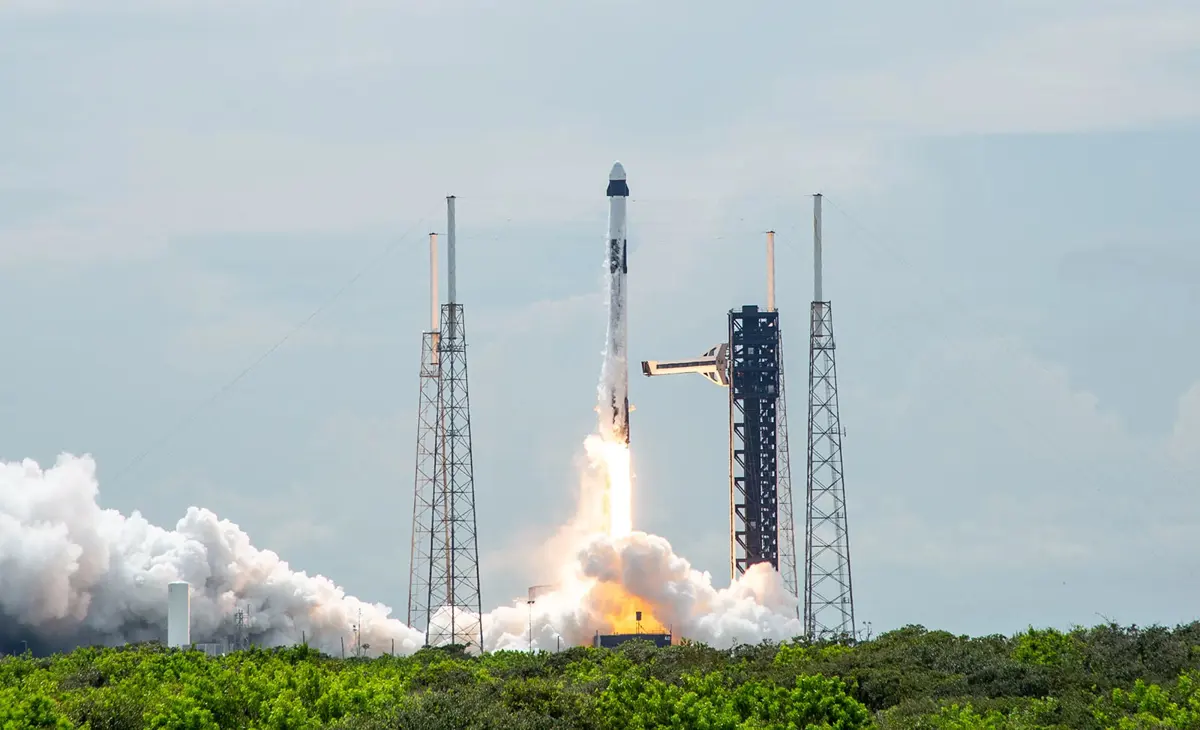
The answer is largely one word: Starlink. SpaceX's satellite internet division now operates more than 9,800 satellites in low Earth orbit - the largest constellation ever assembled. It is currently the only profitable part of SpaceX's entire business, generating $4.4 billion in operating income at a 39% margin. While the rocket side of the company burns cash building Starship and expanding launch capacity, Starlink keeps the lights on and gives investors something concrete to anchor a valuation to.
The Rocket Math
Beyond Starlink, the investment case rests on scale and trajectory. SpaceX already launches more rockets annually than any nation on Earth. Starship V3 - still in development - is designed to fundamentally change the economics of getting cargo and people to orbit. If it delivers on its stated goals, the revenue potential dwarfs anything the company earns today.
There is also the xAI dimension. SpaceX recently merged with Elon Musk's artificial intelligence company, adding another growth narrative to an already complex valuation story. The combined entity sits at the intersection of two of the most capital-intensive industries on the planet: space and AI. The company also holds 18,712 Bitcoin, currently valued at around $1.2 billion - a detail that surprised more than a few analysts reading the S-1.
Elon Musk Is Now, Officially, the World's First Trillionaire
Musk didn't sell a single share in the offering. His stake in SpaceX alone, at the IPO price, is valued at roughly $866 billion. Add his Tesla holdings and the total crosses $1 trillion. It is a number that had no human equivalent before last Thursday.
SpaceX's IPO is more than a financial milestone — it's a signal that the market believes the next era of computing happens in orbit.
Market analyst reaction, June 2026
An IPO Built for Regular Investors, Not Just Wall Street
One detail from this offering stood out from typical mega-IPOs: SpaceX allocated roughly 30% of shares to retail investors. In most large public offerings, individuals get between 5% and 10%. Tripling that allocation meant people buying through their brokerage apps could get in at $135 - not chase the stock at $160 after institutions had already taken their positions.
Whether that was deliberate strategy, a nod to Musk's public image, or something else entirely, it made this the most broadly distributed major IPO on record.
What Comes Next
SpaceX is now a public company - which means quarterly earnings calls, analyst pressure, and a stock ticker refreshing in real time. For an organization that has operated largely in private, moving fast and occasionally blowing things up on the launchpad, that is a genuinely new kind of accountability.
The first-day performance suggests investors are willing to be patient. They are not buying SpaceX for what it earned last year. They are buying it for what they believe the next decade looks like: Starship making deep-space missions viable, Starlink blanketing the planet in broadband, and a merged SpaceX-xAI entity sitting at the center of two technology revolutions at once.
Whether any of that arrives on schedule is anyone's guess. But as of June 12, 2026, Wall Street has placed a $2.1 trillion bet that it will.