Picking between GitHub Copilot vs Cursor vs Tabnine in 2026 is harder than it looks. All three handle multi-file edits, support frontier models, and plug into most major IDEs. Under the surface, though, they have diverged sharply - Copilot holds 4.7 million paid subscribers and sits inside 90% of Fortune 100 companies, Cursor hit $2 billion in annual recurring revenue with more than one million paying users, and Tabnine abandoned its consumer tiers entirely to focus on enterprise air-gapped deployments. Choosing the wrong one doesn't just cost $10 to $59 per developer per month - it means picking a workflow that may fight your team's actual constraints.
GitHub Copilot Leads on User Count and Enterprise Trust
GitHub Copilot reached 4.7 million paid subscribers in January 2026, up 75% year over year. Roughly 90% of Fortune 100 companies run it across more than 50,000 organizations globally. Pricing sits at $10 per month for individual developers, $19 per user per month for business teams, and $39 per user per month for enterprise accounts. Microsoft ended the AI credit subsidy in June 2026, closing the discount that had let enterprise accounts run premium models below list price.
Copilot's real advantage is not the code completions - it's the surface area where those completions live. Pull request reviews, GitHub Actions, security scanning, and Copilot Workspace all connect through a single GitHub account, sitting inside the workflow developers already use rather than requiring a separate application switch. For teams running Microsoft Azure, Visual Studio Enterprise, or Teams, Copilot deploys with almost no friction. Microsoft's Foundry platform is expanding autonomous coding agents that will eventually route through GitHub, deepening that integration further.
Multi-file and agentic tasks are where Copilot trails. Copilot Workspace handles basic multi-file flows, but its agent capabilities lag behind what Cursor ships as a default experience. Copilot wins on breadth of ecosystem coverage; it does not win on depth of agentic work per session.
Cursor's Composer 2 Achieves a 72% Autocomplete Acceptance Rate
Cursor's $2 billion ARR makes it the highest-revenue AI coding tool in the category. Composer 2, released in March 2026 on Moonshot's Kimi K2.5 model, produces a 72% autocomplete acceptance rate - the highest published figure in the category to date. Cursor 2.0 followed with a proprietary Composer model described as four times faster than comparable alternatives, plus a multi-agent interface supporting up to eight parallel agents running simultaneously.
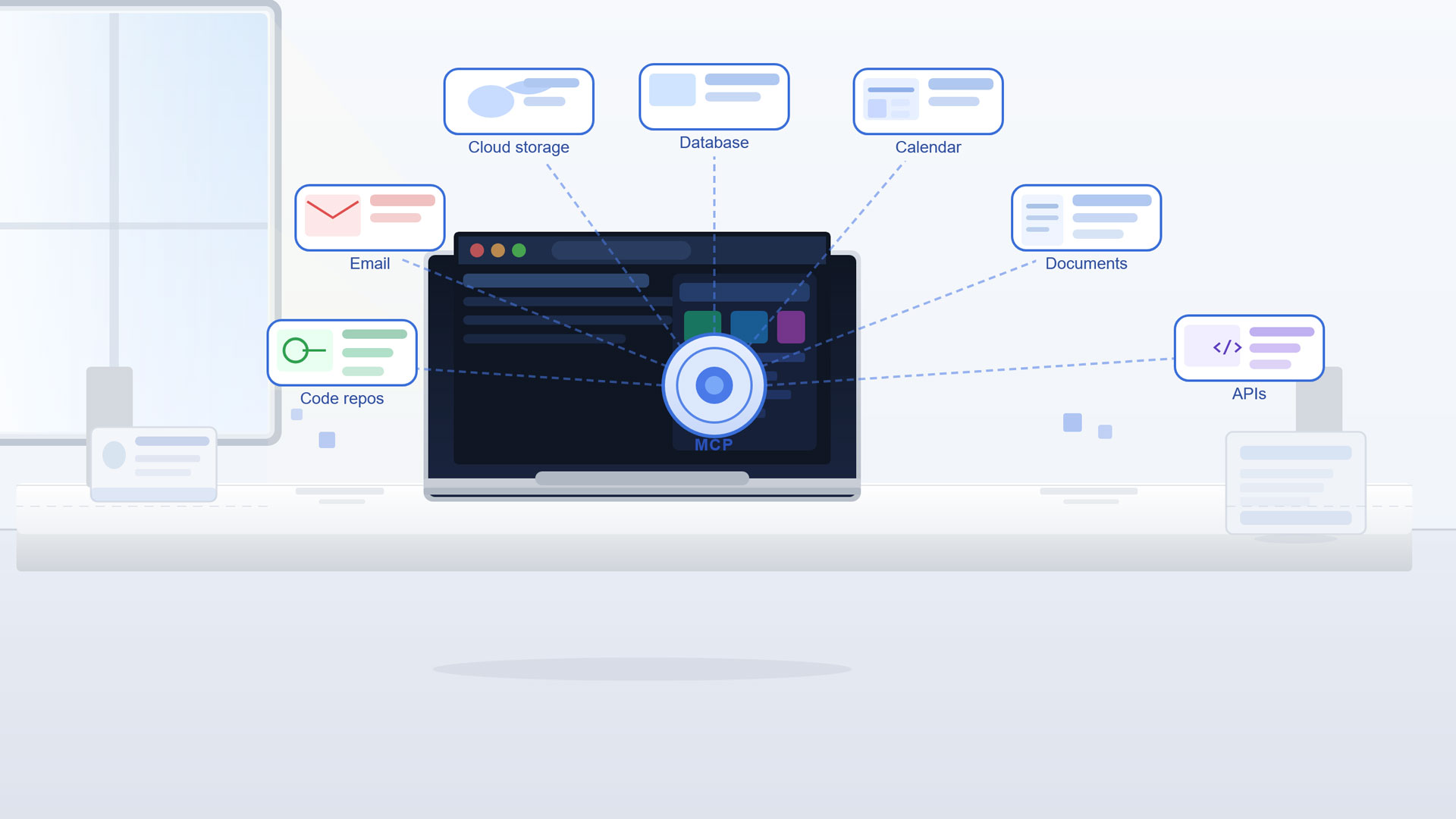
Background agents are the feature that separates Cursor from the field. Each agent runs inside an isolated virtual machine, tests its own changes, and logs all work through video playback, terminal output, and screenshots. Developers assign tasks and check back rather than supervise each step - a model that maps directly to how agentic AI is evolving across the industry. Cursor supports OpenAI, Claude, and Gemini, letting teams swap models per task rather than committing to a single provider. MCP integration means agents can pull from databases, documentation systems, and internal APIs directly from within Composer.
Model flexibility is probably the feature that attracted enterprise teams to Cursor faster than anyone expected - and it is also the feature most at risk. SpaceX acquired Anysphere, Cursor's parent company, for $60 billion earlier this year. xAI's Grok becoming a default or preferred model inside Cursor would be a meaningful change for teams currently routing Claude or GPT-4o through Composer - and one no enterprise customer asked for. Nothing has been announced.
| GitHub Copilot | Cursor | Tabnine | |
|---|---|---|---|
| Paid users | 4.7 million | 1 million+ | Enterprise-only |
| Pricing | $10 / $19 / $39 per user/month | $20 per user/month | $59 per user/month (Agentic) |
| Model support | GPT-4o, Claude, Gemini | GPT-4o, Claude, Gemini, Kimi K2.5 | GPT-4o, Claude, Llama, Mistral, private |
| Parallel agents | Limited (Workspace) | Up to 8 agents | Agentic tier |
| Deployment | Cloud only | Cloud only | SaaS, VPC, on-prem, air-gapped |
| MCP support | Partial | Yes | Yes (Agentic tier) |
| Best for | GitHub / Microsoft ecosystem | Multi-file editing, agentic work | Regulated industries, strict data policy |
Tabnine Dropped Its Free Tier and Rebuilt Around Enterprise Compliance
Tabnine sunset its free and standalone Pro plans in 2026, exiting the consumer market entirely. Every customer now sits on an enterprise contract. The Agentic tier runs $59 per user per month and includes autonomous agents, Tabnine CLI, MCP support, and the Enterprise Context Engine. Gartner placed Tabnine as a Visionary in its 2026 Magic Quadrant for Enterprise AI Coding Agents - recognition the company credited to its Enterprise Context Engine and multi-mode deployment options.
Enterprise Context Engine, released as generally available in February 2026, builds a continuously updated model of an organization's codebase, internal documentation, and engineering conventions. Agents draw on that organizational knowledge rather than relying on open-file context alone. For a team at a bank or hospital where years of domain-specific decisions live in internal wikis and legacy repositories, that institutional context layer produces more useful output than any generic autocomplete benchmark.
Deployment flexibility is where Tabnine has no competition. Four modes cover every risk profile: SaaS cloud for fast rollout, virtual private cloud for network isolation, on-premises for strict data residency requirements, and fully air-gapped for environments where code must never leave the building. No other enterprise-grade AI coding assistant supports air-gapped deployment. For development teams in defense, financial services, or healthcare where security policy controls what leaves the infrastructure, Tabnine is often the only option that clears legal review without requiring a custom build.
Which Tool Fits Your Team Depends on One Constraint
Budget, IDE preference, and benchmark scores matter less than most developers expect when picking between these three. Model quality differences narrow quickly as providers update. The durable question is simpler: who controls what happens to your code, and where does your team already live?
GitHub Copilot - your team lives in GitHub and needs Microsoft compliance coverage, enterprise SSO, and audit logs without a separate vendor. Cursor - you want best-in-class multi-file editing, up to 8 parallel agents, and model flexibility across Claude, GPT-4o, and Gemini, and cloud processing is acceptable. Tabnine - your legal or security policy requires on-premises or air-gapped deployment, or you need an enterprise context layer trained on your internal codebase and documentation.
Most developers comparing GitHub Copilot vs Cursor vs Tabnine are not choosing the "best" tool in the abstract. Copilot wins on distribution and GitHub ecosystem depth. Cursor wins on raw capability, revenue momentum, and agent sophistication. Tabnine wins on compliance coverage and organizational context depth. All three are the right answer for a specific kind of team - and the wrong answer for the other two.
Where the category goes next depends on decisions none of these companies have made public yet. Cursor's model flexibility faces uncertainty following the SpaceX acquisition. Copilot's agent roadmap runs through Microsoft Foundry's infrastructure, which is still rolling out. Tabnine's enterprise-only pivot means its future is tied to whether compliance requirements keep tightening in regulated industries - and all signals suggest they will.