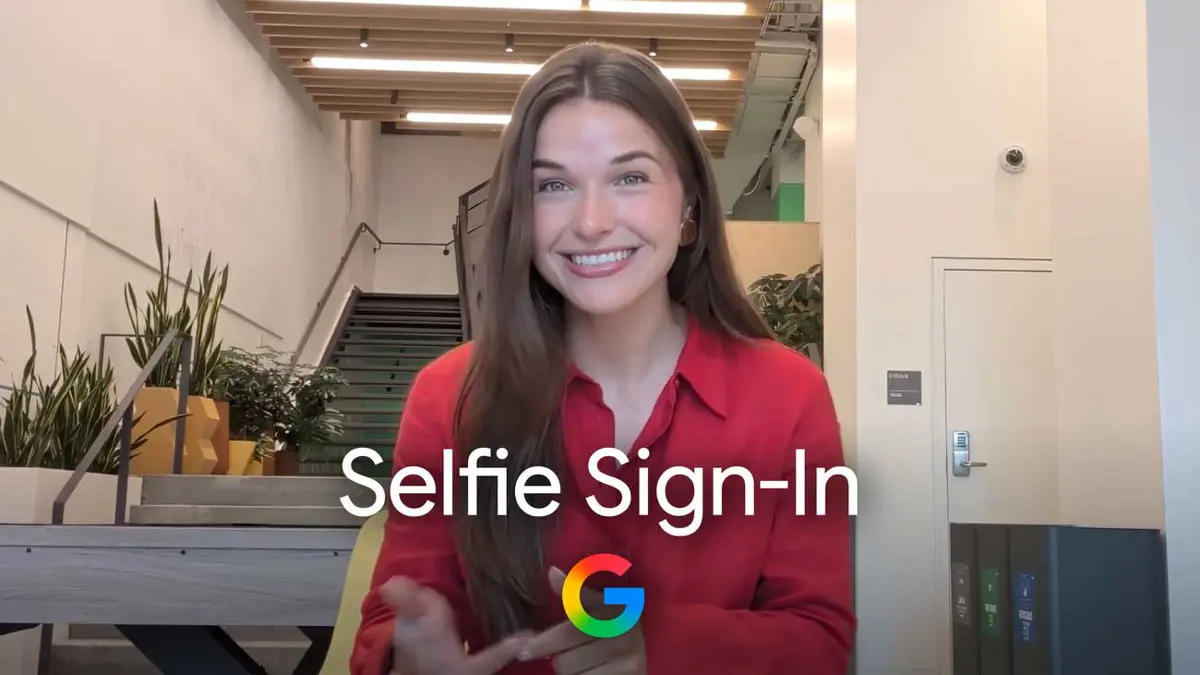
Google rolled out a new account recovery option today called selfie video sign-in, letting users record a short face video that can later verify their identity when traditional recovery methods - like a backup phone number or email - aren't available. Google selfie video sign-in is launching now for personal Google accounts, though not for Google Workspace accounts, child accounts, or accounts enrolled in the Advanced Protection Program.
Two Steps: Enroll Now, Use It When You're Locked Out
Setup lives under Security & sign-in in Google Account settings. Users follow guided prompts asking them to look into the camera and perform a few head movements. No camera on a computer? Google surfaces a QR code to complete enrollment on another device.
When a lockout occurs, Google may prompt the user to record another short selfie. Google compares that new recording against the one saved to the account - if the faces match, and the attempt passes Google's existing suspicious sign-in detection, access is restored.
Deepfake Resistance Is Built In - Deletion Has a Caveat
Google built liveness detection into the enrollment and recovery flow. Head movements serve as the liveness check: a flat photo or AI-generated deepfake cannot follow real-time prompts. Google encrypts stored videos and restricts them to sign-in use only, unless users opt in to letting Google use their recordings to improve facial recognition and age estimation - an opt-in that can be revoked at any time.
One detail worth flagging: deleting a saved selfie removes it from account recovery, but Google's support documentation notes it may temporarily retain deleted videos for security purposes, or longer in cases involving policy enforcement. A supply chain attack exposed LastPass customer data through a breach at integration partner Klue - the kind of incident that makes biometric recovery appealing, since a face video stored directly by Google cannot be phished from a third-party password vault. 1Password integrated with Claude earlier this year for AI-driven autofill, part of a broader industry shift away from credential management that relies purely on things users remember or store elsewhere.
Advanced Protection Users Are Left Out - the Same Group That Needs It Most
Google frames selfie video sign-in as a supplemental option alongside passkeys, recovery emails, and recovery contacts - not a replacement for any of them. Notable exclusions: Workspace subscribers, child accounts, and Advanced Protection users are exactly the group for whom account recovery is most consequential. Google said it will expand to additional devices and countries over time, with no timeline given.