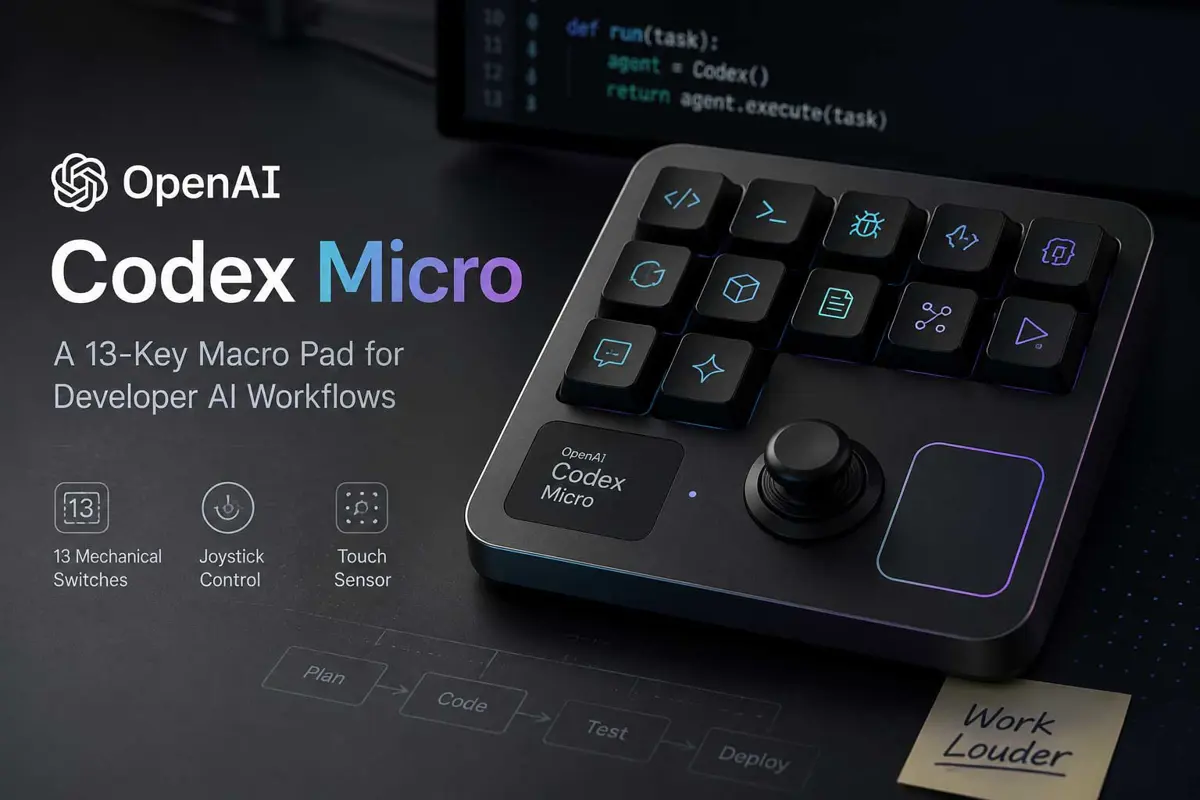
OpenAI unveiled its first hardware product on June 30 - not a phone, not a wearable, but a compact macro pad called the OpenAI Codex Micro. Built in partnership with boutique keyboard maker Work Louder, the device targets developers who spend their days inside the Codex desktop application. Pricing and full specs land July 15.
Codex Micro Is a Macro Pad, Not a Full Keyboard
Based on Work Louder's Creator Micro 2 chassis, the Codex Micro ships with 13 mechanical switches, a joystick, and a touch sensor. Each input is fully programmable to trigger specific actions inside the Codex desktop app - things like launching an agent run, switching between models, or submitting a prompt without touching the main keyboard. For engineers grinding through multi-hour Codex sessions, a dedicated physical shortcut layer changes how you interact with an AI agent in a way no hotkey configuration can fully replicate.
Work Louder has a loyal following. Mechanical keyboard enthusiasts know the brand for build quality and switch selection, but this deal puts the company in front of a much wider audience: software engineers deep in AI-assisted development who have likely never shopped for a macro pad and may not know the category exists.
OpenAI Enters Hardware With a Developer-First Bet
OpenAI has stayed in software and APIs since its founding. Hardware is new territory. Among AI developer tool makers, GitHub Copilot ships as an IDE plugin and Cursor runs as a standalone code editor - neither has pursued physical input devices. OpenAI picking a focused macro pad over a broader consumer gadget suggests a deliberate B2B path for Codex, positioning the tool as a persistent desktop workstation rather than another chat interface. A macro pad is an unusual first hardware choice, but it tells you something clear: OpenAI sees Codex as a professional tool that deserves its own dedicated workflow layer.
July 15 is still two weeks out. Neither OpenAI nor Work Louder has published pricing, platform support, or where to buy, leaving developers with a teaser but no way to pre-order. OpenAI's separate hardware project developed with designer Jony Ive's firm LoveFrom remains on a longer, unannounced timeline.