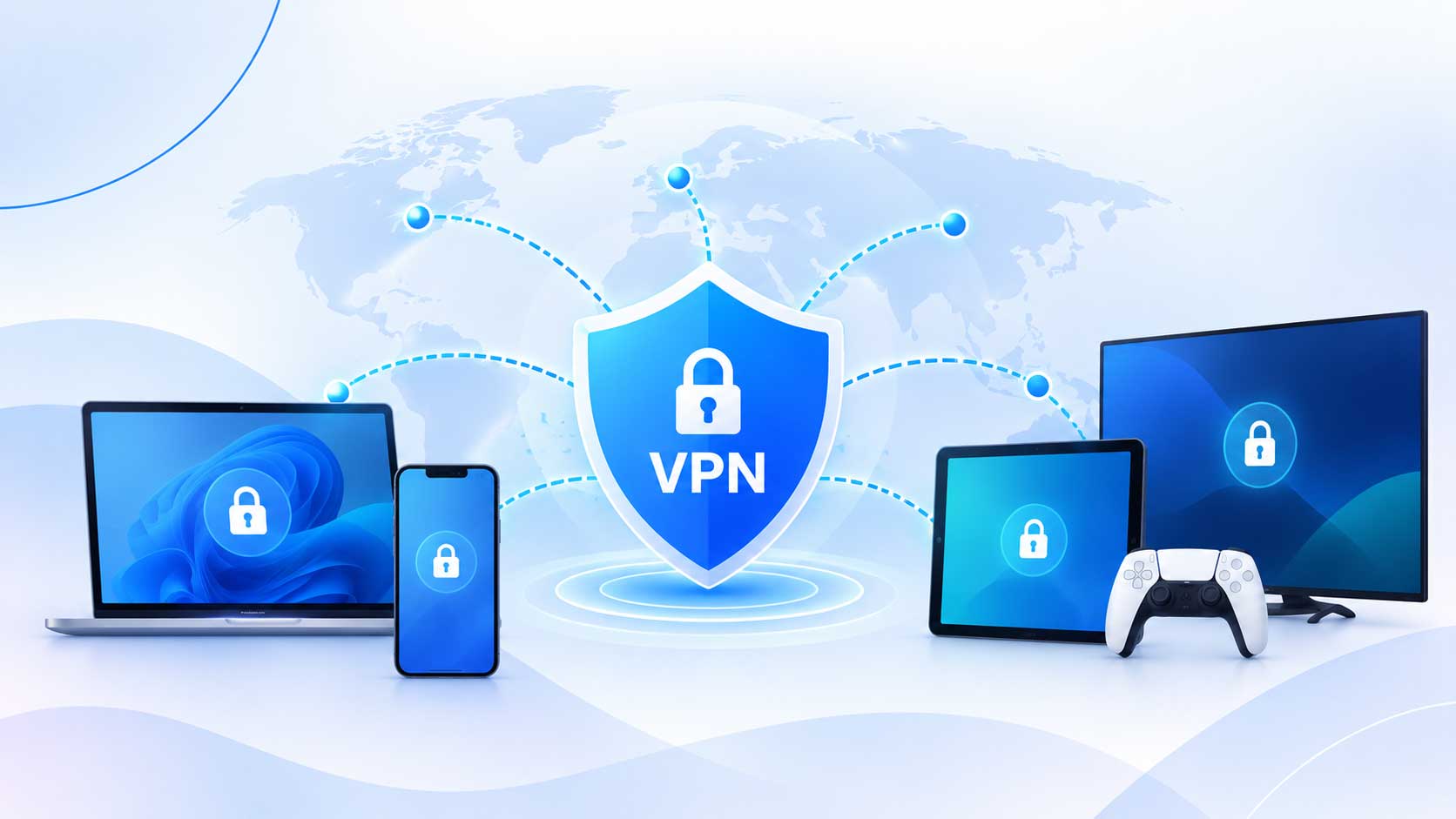
A VPN buying guide has one job: surface the checks that marketing copy buries. No-logs audits, jurisdiction, kill switch implementation level, renewal pricing, and device limits all affect whether a subscription is worth its cost - none of those factors appear on the banner price page. Six checks follow, in order of importance.
1. Audit Credibility Is the Only Verifiable Trust Signal
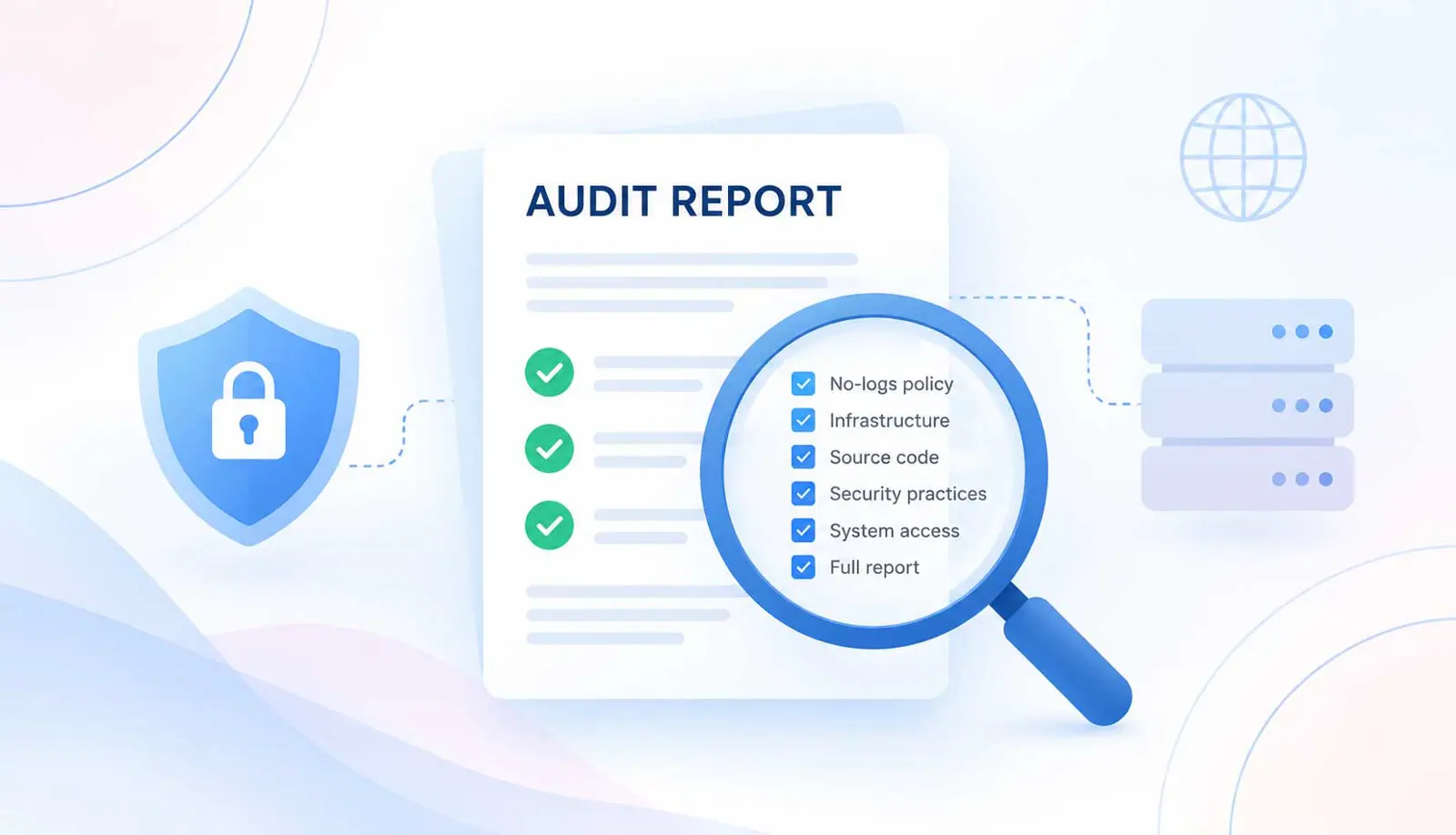
Every VPN claims a no-logs policy. Audits are the only external check on whether that claim holds. Three things separate a credible audit from a press release with a firm's logo on it: the auditor is a named security firm (Cure53, Securitum, Deloitte, KPMG, or PwC), the full report is publicly downloadable rather than summarised in a blog post, and auditors had access to production servers rather than just documentation. A no-logs audit that publishes only a summary tells the reader what the provider wants them to hear - not what the auditor actually found.
Recurring audits matter more than a single report. Proton VPN has published five annual audits, the latest by Securitum in August 2025, with every report downloadable without an email wall. NordVPN (Deloitte), ExpressVPN (Cure53, KPMG), and Surfshark (Cure53) have all passed named third-party reviews as well. One-off audits from 2021 or earlier are not a current trust signal. Providers update infrastructure regularly, and an audit covers the state of systems at a point in time, not permanently.
2. Jurisdiction Determines Whether the No-Logs Claim Can Be Enforced
Jurisdiction sets the legal ceiling on what a no-logs policy can actually protect. Registration country matters. Fourteen countries participate in the 14 Eyes intelligence-sharing alliance: the US, UK, Canada, Australia, New Zealand, Denmark, France, Netherlands, Norway, Germany, Belgium, Italy, Spain, and Sweden. A VPN registered in any of these countries operates under laws that can compel data disclosure - even from a provider with an honest no-logs policy. "Outside 14 Eyes" is a meaningful buying criterion.
Privacy-friendly registration locations among established providers: Switzerland (Proton VPN), Panama (NordVPN), and the British Virgin Islands (ExpressVPN). Jurisdiction is a shield, not an exemption. Swiss law does not require VPN providers to log traffic under normal civil or commercial proceedings - a frequent reason for choosing Geneva as a registration location. Proton VPN's 2021 Mail case showed Swiss jurisdiction can yield under criminal court orders, but that case involved email under different rules, not VPN traffic under VPN law. Combining favorable jurisdiction with a verified no-logs architecture is the stronger setup - not one or the other.
3. Two Technical Checks: Kill Switch Depth and Protocol
Kill switches are not all equal. Network adapter-level kill switches operate at the OS layer, blocking all traffic via firewall rules when the VPN disconnects - even if the VPN app crashes or is killed by the operating system. App-level kill switches depend on the VPN app remaining active: if the app fails, traffic can leak through the gap during reconnection. NordVPN, ExpressVPN, and Proton VPN all implement kill switches at the network adapter level on Windows, per their official feature documentation. Checking the support page for any VPN under consideration costs two minutes.
Protocol selection is simpler. WireGuard is the default for most users: faster, less battery drain on mobile, and a smaller codebase with zero CVEs since its stable release. OpenVPN remains the right pick when firewalls block UDP or enterprise policy mandates it. Most commercial VPN providers now offer both protocols and let users switch in app settings without changing plans - see the WireGuard vs OpenVPN comparison for the full scenario breakdown, including the OpenVPN DCO update that closed the speed gap on Linux.
4. Renewal Price, Not Banner Price, Is the Real Ongoing Cost
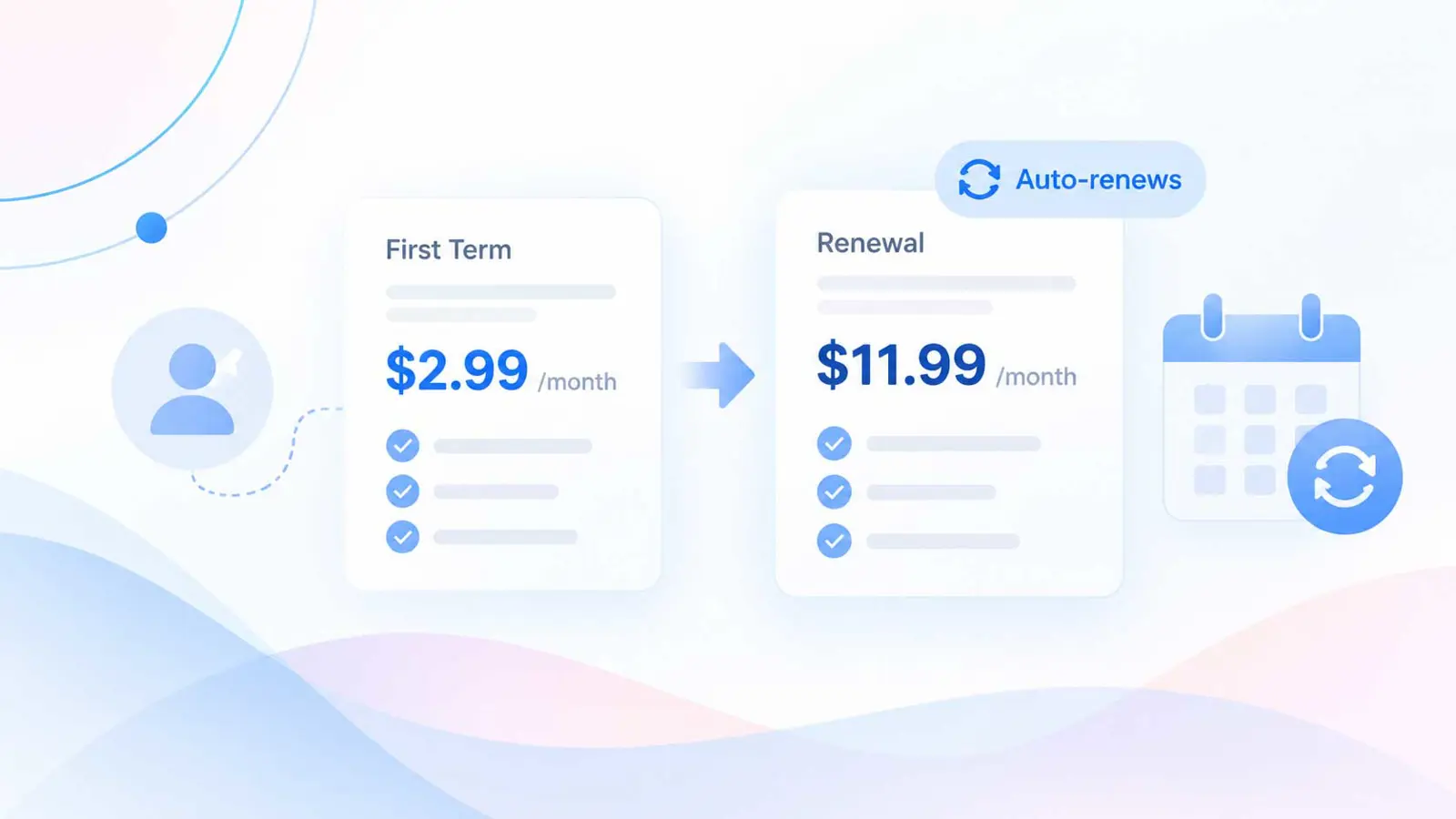
VPN providers advertise introductory pricing that applies only to the first subscription term. Auto-renew is on by default. Budget intro rates from $1.99 to $3.49 a month regularly triple or quadruple at renewal - a $3 a month deal can renew at $11 to $15, per realvpnfacts.com's 2026 price comparison. Banner prices drive customer acquisition; renewal pricing is the ongoing cost. Both numbers belong in a purchase decision before committing to a plan.
Two options address the renewal gap: disabling auto-renewal before the first term ends, then re-subscribing as a new customer if the rate is too high. Most providers offer the intro rate to new accounts - cancelling and re-subscribing often restores the discounted price. Proton VPN's renewal is gentler than most, moving from $2.99 a month (2-year intro) to an effective $6.99 monthly, per protonvpn.com/pricing. Renewal pricing sits at checkout or in the billing terms - a Google search for "[provider] renewal price" surfaces it in under a minute.
5. Device Limits Range From Eight to Unlimited - Count Before Committing
Device limits determine how many devices one subscription covers simultaneously. Surfshark and PIA both offer unlimited simultaneous connections. NordVPN allows 10, Proton VPN Plus allows 10, and ExpressVPN allows eight, per their respective plan pages. A household running two laptops, two phones, a tablet, and a router hits six devices before counting smart TVs or a gaming console. Matching the subscription limit to the actual device count before buying prevents a second subscription or a plan upgrade six months in.
6. What to Skip Entirely
Any provider that cannot name its no-logs auditor and link to the full report is a pass. Full stop. Free VPNs that fund themselves through data sales still operate in 2026, and free browser extensions labeled "VPN" are a common delivery mechanism for this model - many are based in jurisdictions with no privacy law enforcement and no audit record. Hola VPN has routed traffic through other users' devices as exit nodes since 2015 and operates the same way today. VPN providers based in 14 Eyes countries that have never published an audit also fall in this category regardless of their marketing.
For the six checks above applied to specific use cases and platforms, the best VPN guide covers every recommended provider with audit links, renewal pricing, and jurisdiction notes in one place. Use-case guides that apply this VPN buying guide's criteria to a single platform: best VPN for Windows, best VPN for gaming, and best VPN for Netflix. Five providers offering free tiers without the data-selling model appear in the best free VPN guide.
Frequently Asked Questions
What is the most important thing to check when buying a VPN?
Which VPN jurisdiction is best?
What is a VPN kill switch and do I need one?
How much should a VPN cost?
Is a free VPN safe?