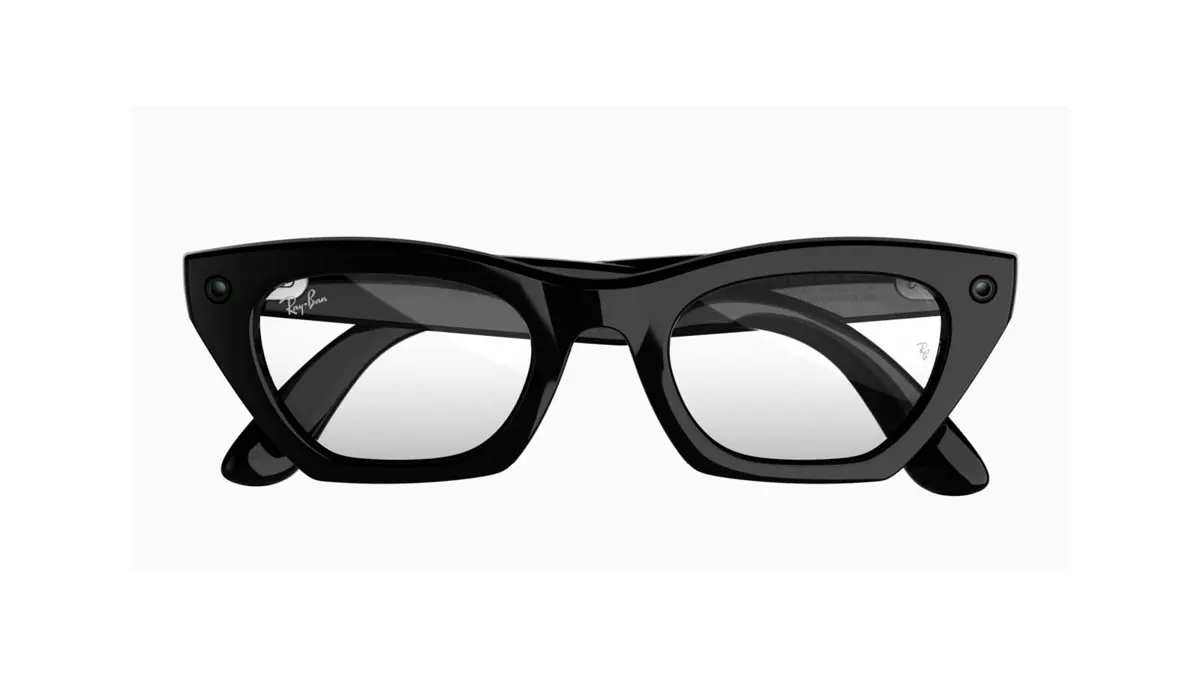
Meta's New AI Glasses Drop the Camera as Privacy Concerns Grow
Meta's new Ray-Ban Meta Audio glasses keep AI, calls, music, and translation while removing the camera from the frame.

Meta's latest glasses launch is notable for what one model does not have. Ray-Ban Meta Audio looks like a conventional pair of Ray-Bans, but there is no camera in the frame. Instead, Meta is positioning the glasses around audio and its AI assistant, giving people a way to use some of the company's wearable features without capturing photos or video.
The timing matters because smart glasses have spent much of the past year caught between convenience and privacy. Camera-equipped wearables can capture moments without requiring a phone, but they can also create uncomfortable questions for people who happen to be in the frame. Meta is now offering a different path rather than removing cameras from its broader glasses lineup.
Ray-Ban Meta Audio still connects users to Meta AI and other connected features. The important change is that this model is designed around audio rather than visual capture.
Meta's Camera-Free AI Glasses Start With Audio
Ray-Ban Meta Audio is Meta's first audio-only glasses. The company says the frames weigh 43 grams and can provide up to 12 hours of use on a single charge, with up to another 48 hours available from the charging case.
The glasses are designed for everyday audio tasks: listening to music and podcasts, taking calls, and talking to Meta AI without reaching for a phone. Meta is offering two frame styles, Clubmaster and Burbank, with 23 color and lens combinations.
The glasses are available for pre-order starting at $349 in the US, with shipping scheduled to begin October 13. Both styles also support a range of prescription options.
That combination makes the product easier to understand than a typical smart-glasses pitch. The hardware is not trying to replace a phone camera. It is closer to a pair of connected glasses that happen to have an AI assistant built into the experience.
Why Removing the Camera Changes the Privacy Conversation
The camera is one of the most distinctive parts of today's AI glasses because it lets the device understand and record the world in front of the wearer. It is also the component most likely to make people nearby wonder whether they are being recorded.
CNA reported that Meta's camera-free launch comes amid wider privacy concerns about smart glasses and the filming of people without their consent. That context does not establish that privacy concerns caused Meta to create Ray-Ban Meta Audio, but it helps explain why a camera-free option is arriving at an important moment for the category.
Meta has also been adding privacy controls and safeguards to its camera-equipped glasses. The new Audio model takes a simpler hardware approach: there is no camera to activate in the first place.
That makes Meta's move part of a broader wearable question: how much of an AI assistant's usefulness comes from seeing the world, and how much can come from hearing, speaking and connecting to a phone?
The same privacy question is already shaping other hardware plans. Saganote's coverage of Apple's planned smart glasses and its privacy-focused approach looks at how another major platform is approaching privacy as glasses move closer to mainstream computing.
Meta Is Not Giving Up on Camera Glasses
Ray-Ban Meta Audio is not a replacement for Meta's camera-equipped glasses. Meta also announced Ray-Ban Meta Gen 3, which includes a 12MP camera and 3K Ultra HD video recording.
Gen 3 starts at $449 and adds longer battery life, a slimmer design and a customizable action button for Meta AI. Meta says the built-in LED indicator helps people around the wearer know when photos or video are being captured.
The two products therefore represent different hardware choices inside the same AI-glasses strategy. One puts visual capture at the center of the experience, while the other removes it and leans harder into audio.
That distinction could matter as Meta tries to make glasses an everyday AI interface. The company says it expects to offer more than 100 glasses options across Ray-Ban, Oakley and Meta Glasses by the end of the year.
The AI Layer Is Still the Main Attraction
The camera-free hardware does not mean Meta is backing away from its larger AI push. The company is bringing Muse, its personal AI agent, to AI glasses and describing the glasses as a hands-free way to manage tasks and everyday activities.
Meta's recent Muse rollout and image-generation experiments show how quickly the company is moving its AI products across Instagram and other services. The glasses extend that strategy into a device that can stay with the user throughout the day.
Meta AI already appears across the company's apps, including Meta AI in Threads DMs. With glasses, the same assistant becomes less tied to a screen: the user can ask a question, hear an answer, and keep doing whatever they were doing.
That is where the camera-free model becomes interesting. Meta is testing whether an AI wearable can be useful even when it does not constantly look through a lens at the user's surroundings.
What You Lose Without a Camera
Removing the camera also creates a clear trade-off. Users cannot take first-person photos or videos from Ray-Ban Meta Audio, and camera-based visual AI features are not available on this model.
That means people who want visual search, hands-free photography or video capture still need one of Meta's camera-equipped glasses. The Audio model is narrower by design.
But narrower can also mean easier to explain. A camera-free pair avoids an entire class of social questions while retaining the features that may be used most frequently: audio, calls and voice interaction.
For people deciding how much personal information they want to share with AI services, the hardware choice is only one part of the equation. Saganote's guide on how to protect your data when using AI chatbots covers the broader privacy questions that still apply when an AI service is connected to personal accounts and conversations.
Meta's Camera-Free Bet Is Really About the AI Interface
Meta is not declaring cameras unnecessary. Its own product lineup shows the opposite. Instead, the company is creating a second route into the same AI ecosystem for people who want glasses that behave more like connected audio devices.
The launch also fits a wider hardware trend in which companies are experimenting with devices that put AI closer to the user without adding another screen. OpenAI's planned consumer hardware has taken a different form, and Saganote's coverage of OpenAI's screen-free hardware concept looks at another attempt to make AI feel less like an app and more like a physical companion.
For Meta, the immediate experiment is straightforward: can people get enough value from an AI assistant in glasses without needing a camera at all?
Ray-Ban Meta Audio does not answer that question by itself. But it gives Meta a useful product test. If users mainly want hands-free conversations, music, calls and AI assistance, a camera may not be essential for every pair of smart glasses.
What to Know About Ray-Ban Meta Audio
- Camera-free, audio-only design.
- Meta AI access through hands-free voice interaction.
- Up to 12 hours of use on a single charge, according to Meta.
- Up to 48 additional hours from the charging case.
- 43-gram frame weight.
- Clubmaster and Burbank styles with 23 color and lens combinations.
- Starts at $349 in the US.
- Pre-orders opened September 23, with shipping starting October 13.