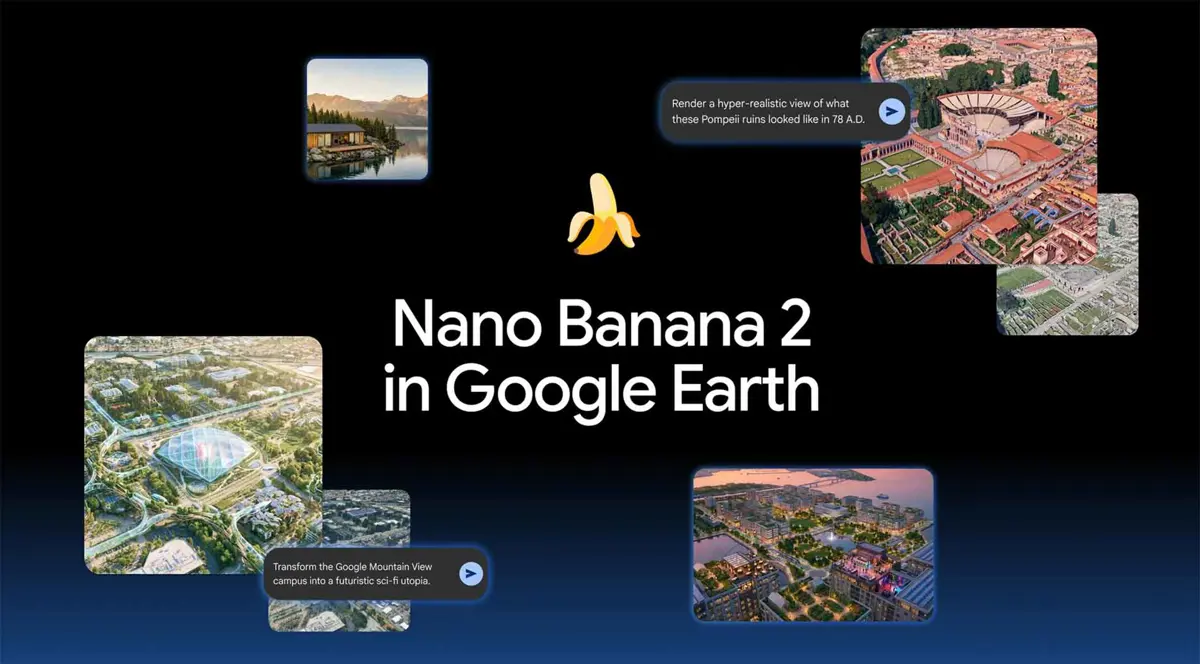
Google Brings Nano Banana AI Image Generation to Google Earth
Google Earth now lets users create AI-generated images inspired by real-world locations using the Nano Banana model.

Google Earth Nano Banana is Google's latest AI feature that brings image generation directly into Google Earth, allowing users to transform real-world locations into creative visuals.
Rather than replacing traditional maps or satellite imagery, Nano Banana builds on Google Earth by adding an AI-powered creative layer. Google says the feature is designed to help users imagine places in different styles while keeping the original geographic context accessible.
What Is Nano Banana in Google Earth?
Google Earth Nano Banana combines Google's mapping technology with AI image generation, letting users create artistic interpretations of real locations using simple text prompts.
According to Google, the feature is intended to help people explore ideas visually, whether they're planning a trip, creating educational content, or experimenting with different artistic styles. The original Google Earth imagery remains available, allowing users to switch between real-world views and AI-generated creations.
How Nano Banana Works in Google Earth
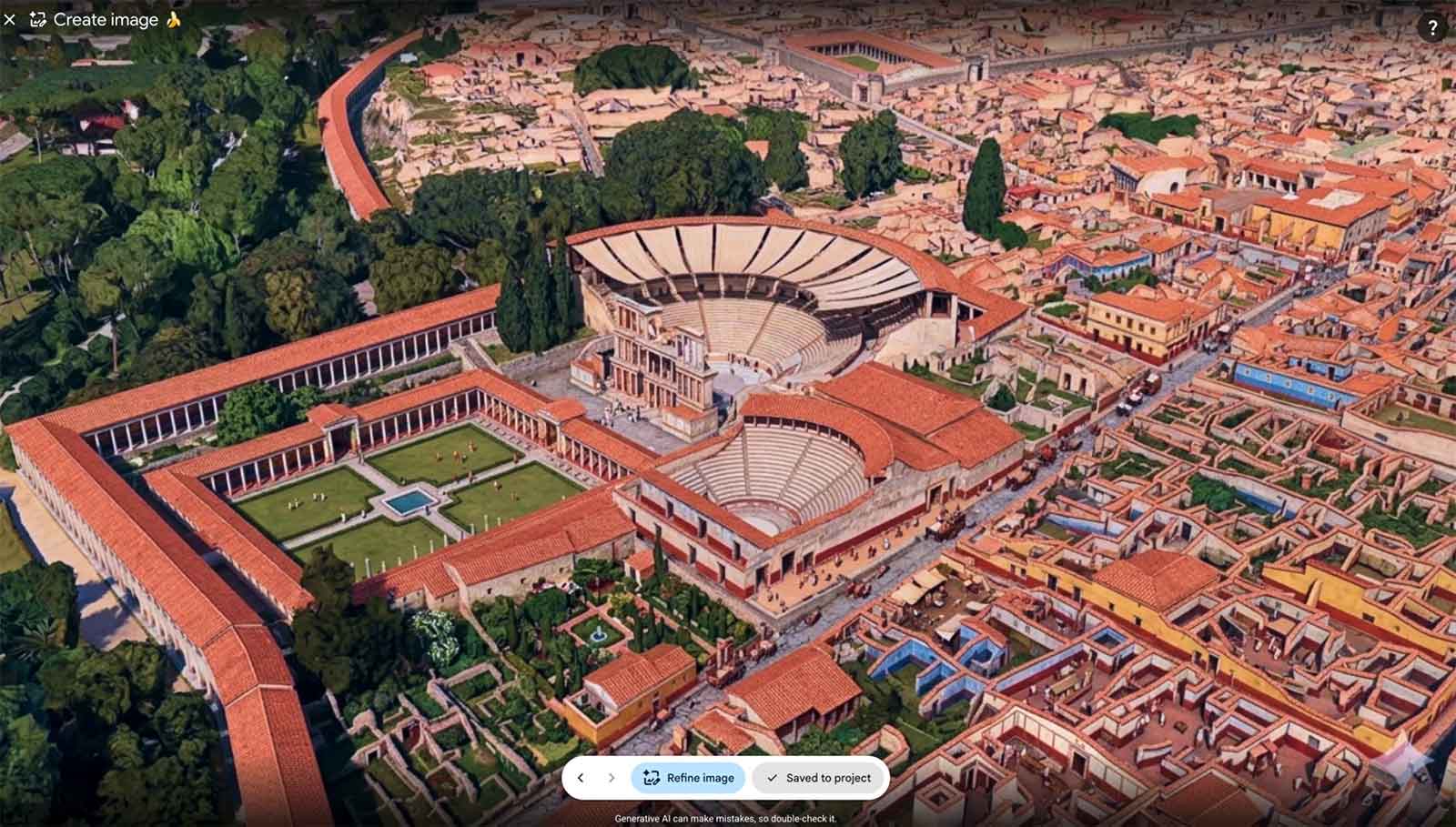
The experience starts by selecting a location in Google Earth. Users can then describe how they'd like the scene to be transformed, and Nano Banana generates an AI-created version based on that prompt. Rather than replacing the original imagery, the generated image appears as a creative interpretation that users can refine or save.
Google says the feature is built for exploration and creativity, allowing users to experiment with different artistic styles, historical reconstructions, or imaginative concepts inspired by real places. The original satellite imagery remains available, making it easy to compare the AI-generated result with the actual location.
What Can You Create?
- Artistic interpretations of famous landmarks.
- Historical-style recreations of real locations.
- Creative travel and vacation concepts.
- Visual ideas for school projects and presentations.
- Concept artwork inspired by cities, parks, and natural landscapes.
Google says Nano Banana is intended to encourage creative exploration rather than replace factual geographic information. Users can freely experiment with different prompts while continuing to access Google Earth's real-world imagery whenever they need accurate location data.
Google's Safety Measures
Because Nano Banana generates entirely new images from real-world locations, Google has built the feature with safeguards to encourage responsible use. Users can refine AI-generated results, but the company says the experience is designed for creative exploration rather than producing deceptive or misleading content.
The launch also reflects Google's broader strategy of bringing generative AI into familiar products instead of limiting it to standalone tools. Recent updates, including Gemini Spark's Chrome integration, show the company expanding AI capabilities across its ecosystem while keeping users in control of how those features are used.
Update: Google Temporarily Paused the Feature
Shortly after announcing Nano Banana for Google Earth, Google temporarily paused the rollout while it evaluates additional safeguards. The company says it wants to ensure the experience meets its quality and safety standards before expanding availability more broadly.
Why This Matters
Nano Banana represents another step in Google's effort to make AI more useful inside products that millions of people already use. Instead of asking users to switch between separate AI tools, Google is embedding image generation directly into Google Earth, making creative workflows feel more natural.
The announcement follows several recent Google updates, from improving Android device backups to expanding Gemini across Chrome and other services. Together, these changes highlight the company's focus on making AI and productivity features part of everyday experiences rather than standalone experiments.
Final Thoughts
Nano Banana brings a creative dimension to Google Earth by combining real-world locations with AI-powered image generation. While the feature is currently limited and Google is taking additional time to strengthen its safeguards, it offers a glimpse of how generative AI could make mapping, education, travel planning, and creative projects more interactive in the future.
As Google continues expanding AI across its products, features like Nano Banana demonstrate that generative AI is becoming a natural part of everyday tools rather than a standalone experience. It will be worth watching how Google evolves the feature once the broader rollout resumes.
FAQ
What is Nano Banana in Google Earth?
How does Nano Banana work?
Is Nano Banana available to everyone?
Can Nano Banana replace Google Earth's satellite imagery?