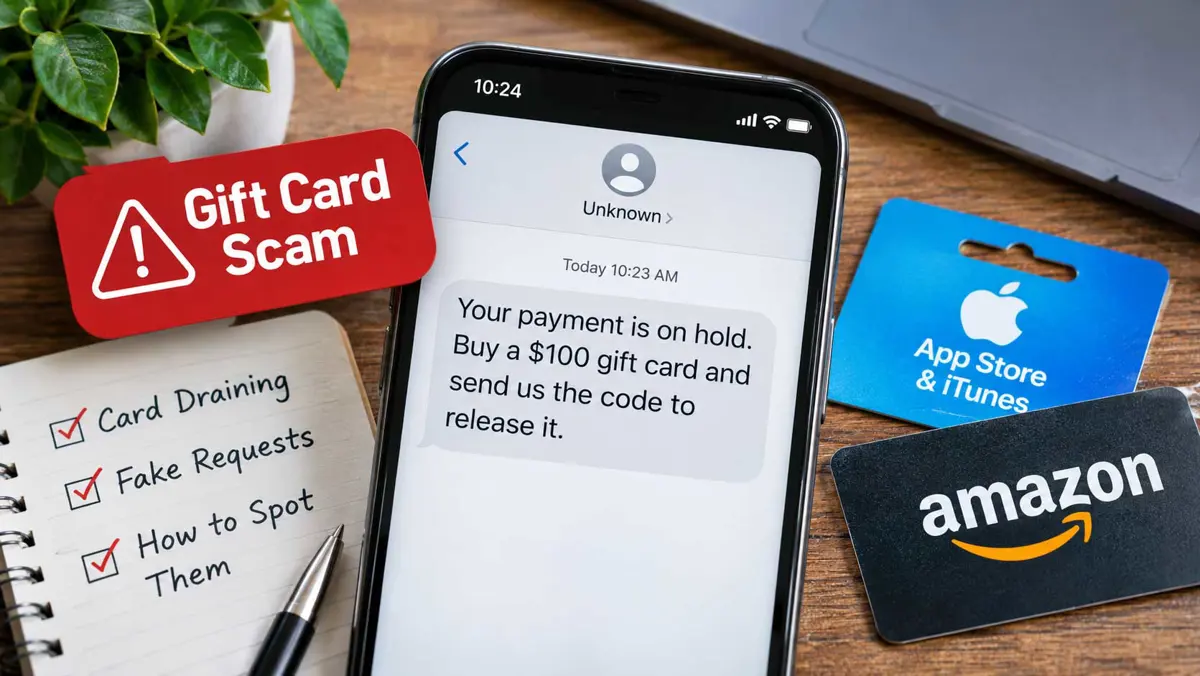
Gift card scams in 2026 come in two forms: tampered cards on store racks that get drained after activation, and callers or messages that demand a gift card as payment. Saganote read the FTC's consumer article, the National Cybersecurity Alliance's holiday guidance, the Retail Industry Leaders Association's consumer page, and CBS Philadelphia's December 2025 report on November 22, 2026. Their dates differ.
Why Gift Cards Show Up in So Many Scams
CBS Philadelphia reported on December 8, 2025 that gift cards appear in at least 25% of fraud complaints, citing the FTC, and that federal investigators call gift card fraud a billion-dollar international industry. FTC's linked release is dated March 2025 and covers 2024 reported losses, per CBS. Figures are secondhand.
Card Draining: How Tampered Cards Work
National Cybersecurity Alliance (NCA) guidance dated December 4, 2024 says scammers take cards off shelves, copy the numbers and PINs by photographing or writing them down, and put the cards back. They may also swap real cards for counterfeits. Bots then check balances after activation, and funds move once a balance appears.
CBS quotes Lisa LaBruno, head of the Gift Card Fraud Prevention Alliance, saying criminals steal unactivated cards, copy the numbers and PIN, and return them to the rack, after which automated systems drain the money once a buyer loads it. NCA puts it bluntly: by the time the gift is presented, the money is long gone. Timing is the trick.
Payment-Request Scams That Ask for Gift Cards
FTC's article says these scams start with a call, text, email, or social media message, and the sender says to pay right away or something terrible will happen. Scammers pick the card and the store, often Walmart, Target, CVS, or Walgreens, and may stay on the phone while the victim shops. Next they demand the number and PIN.
| Story | Typical demand | FTC's description or guidance |
|---|---|---|
| Government agency | Immediate payment | Agencies never demand payment by gift card |
| Tech support | Gift card and computer access | Do not give them access to the computer |
| Family emergency | Money right away, and tell no one | Described by FTC as a demand to send money without telling anyone |
| Prize or sweepstakes | A card bought to pay for the prize | No honest business or agency will ever make anyone buy a card for a prize |
FTC's article boils it down to one rule: no real business or government agency will tell anyone to buy a gift card to pay them. Utility, romance, and fake-check schemes use the same payment. FTC's page metadata lists January 28, 2026 as published and June 9, 2026 as modified, while its body ends with July 2023, so the exact date is uncertain.
Checks Before Buying a Card
Checks at the rack address only the draining half of gift card scams, since payment-request scams start with a call or message long before any card is picked up. Checking a rack feels fussy for a small present. Sources still list the same few steps.
- Inspect the packaging. NCA says to look for peeling stickers, scratched-off PINs, resealed packaging, tears in the zigzag cuts around a secure pack's edge, or paper fibers at the border.
- Check the PIN cover. RILA says it should be smooth, intact, and not tampered with, and a wrinkled or loose cover means choosing another card and telling store staff.
- Prefer cards kept behind the counter. NCA says cards handed over by a clerk are less likely to be tampered with.
- Buy from reputable retailers. RILA says to avoid discounted or secondhand cards on third-party sites.
- Keep the receipt and the original packaging. Both NCA and RILA say receipts matter if fraud occurs.
- Check the balance only through the website or phone number on the back of the card, per RILA, and never through search engines or links in emails or texts.
- Spend the balance soon. NCA says to check it periodically until it is gone.
Retailers are changing the racks. CBS reports that Target redesigned its cards with a blank space where the access code used to be, and the cashier applies the code at checkout. Other retailers are adding tamper-proof packaging or displays that stop removed cards from going back.
CBS also cites AARP for a count of at least 11 states that passed gift card fraud laws in 2025, and says Delaware passed a law in 2024 requiring retailers that sell third-party gift cards to display scam notices. AARP's own page did not load for Saganote, so that count is secondhand. Rules vary by state.
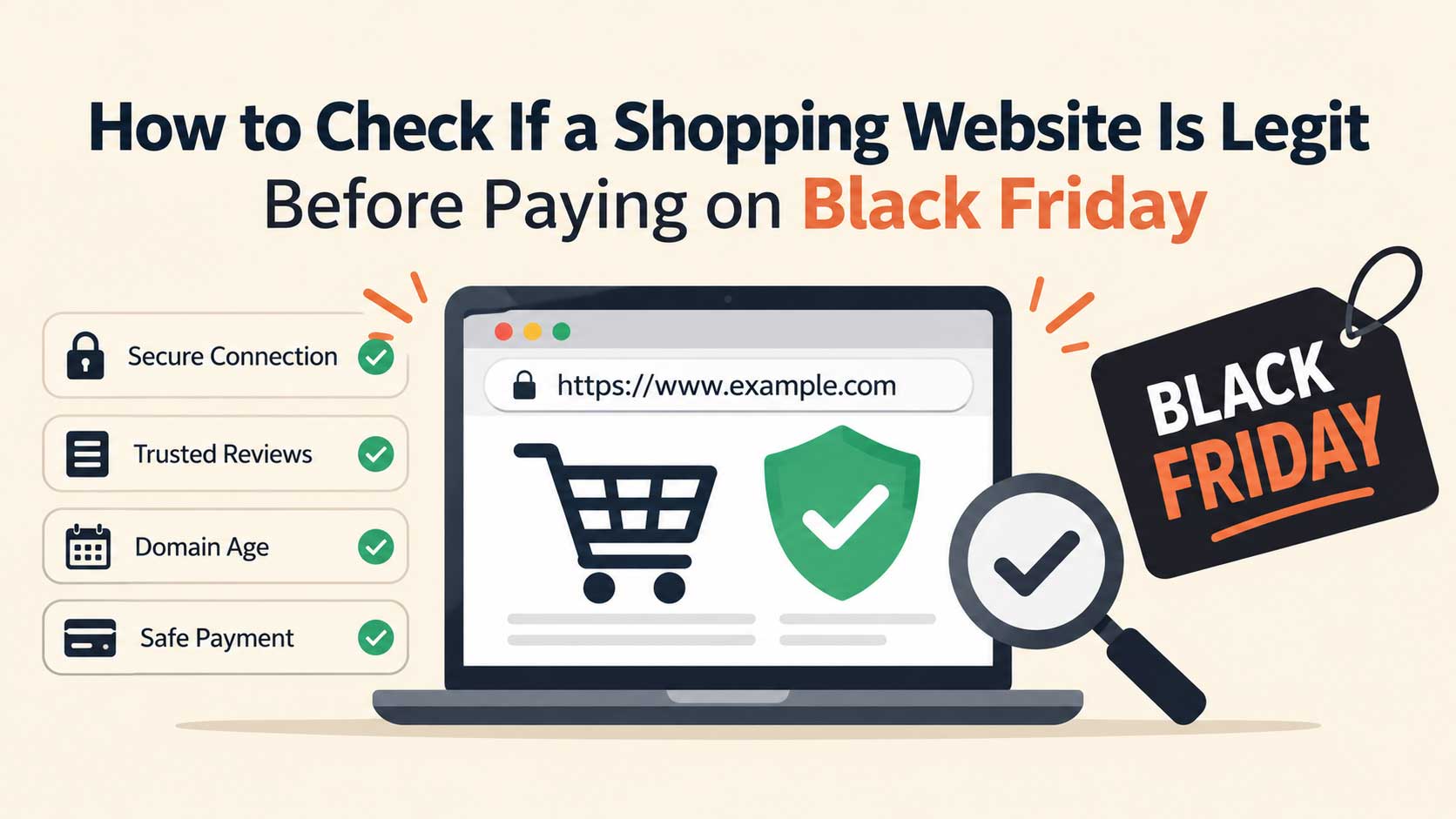
Shopping online brings similar pressure. Saganote's guide to checking whether a shopping website is legit before paying on Black Friday walks through legitimacy checks, and its package-delivery text scam guide covers fake USPS, UPS, and FedEx messages.
What to Do If a Card Was Drained
RILA says to act quickly: contact the company listed on the back of the card, report to local police, the state attorney general's office, and the FTC, and contact the retailer where the card was bought if it was tampered with. Some retailers and networks may freeze the remaining balance. Keep the receipt and packaging.
For payment-request scams the steps differ. FTC's article says to report the scam to the gift card company right away, ask for the money back, and tell the FTC at ReportFraud.ftc.gov, keeping the card and store receipt.
| Card issuer | Phone number listed by FTC |
|---|---|
| Amazon | 1 (888) 280-4331 |
| Apple | 1 (800) 275-2273 (say "gift card" for a live representative) |
| Best Buy | 1 (888) 237-8289 |
| Target | 1 (800) 544-2943 |
| Walmart | 1 (888) 537-5503 |
These numbers come from FTC's article, whose dates conflict. When the number on the back of the card differs, use the one on the card.
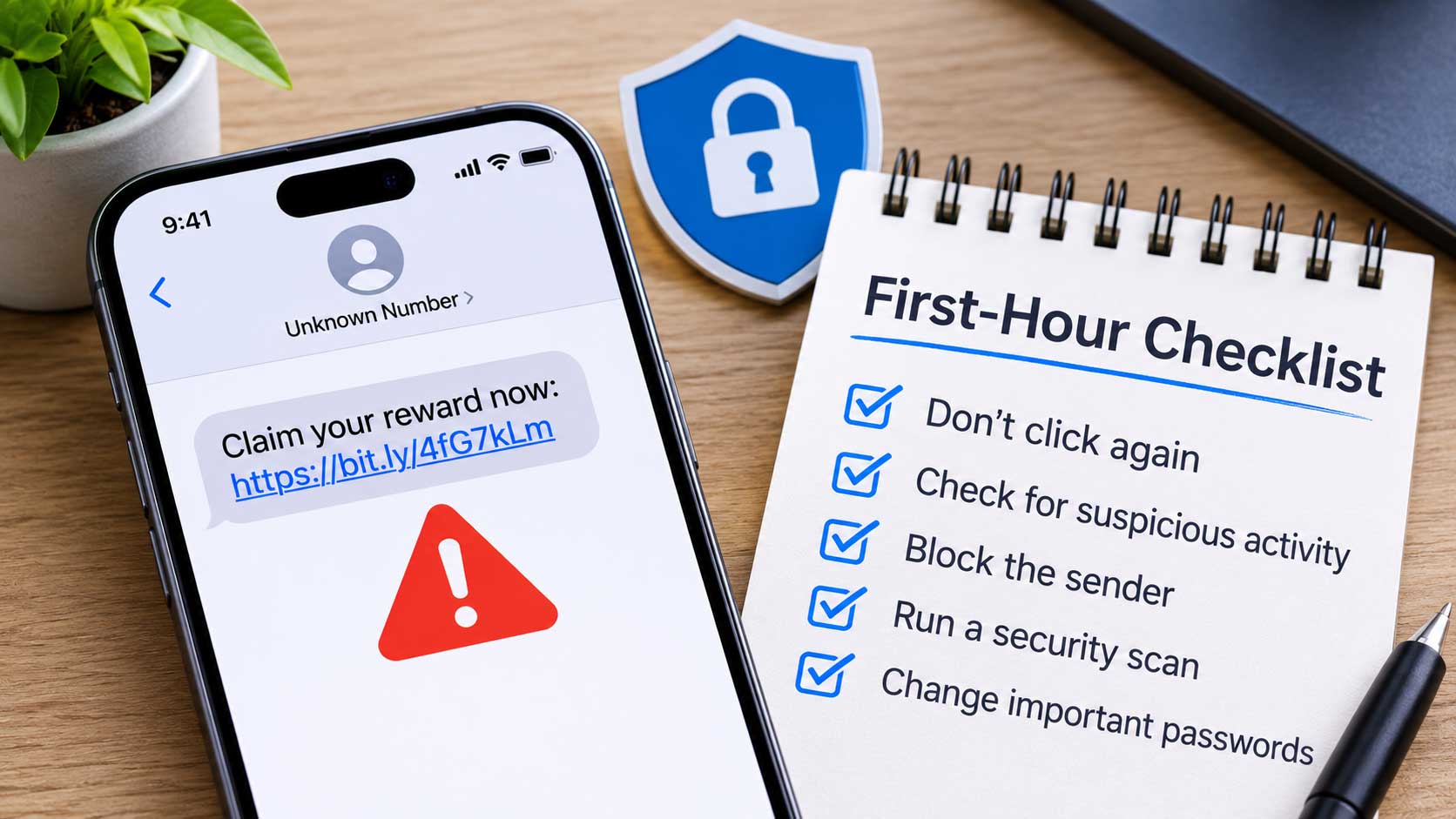
A victim who also clicked a link can use Saganote's first-hour checklist for a scam text link alongside the steps above, since many demands arrive by text. Message filters catch some demands early. Truecaller's Scam Checker looks at links, numbers, and messages, and Google Messages' Enhanced Protection has a guide for turning it on, though no message filter sees a card bought in a store.
Shoppers weighing gift card scams against holiday plans can cut the risk with three habits: inspect the rack, buy behind the counter, and spend balances early. Pennsylvania lawmakers plan a similar law, per CBS.
Frequently Asked Questions
What is card draining?
Would a real business ask for payment in gift cards?
Who should be contacted after a drained card?
Where does the FTC take reports?
Does keeping the receipt help?