Meta Expands Muse AI Agent to Small Businesses With New Business Tool Integrations
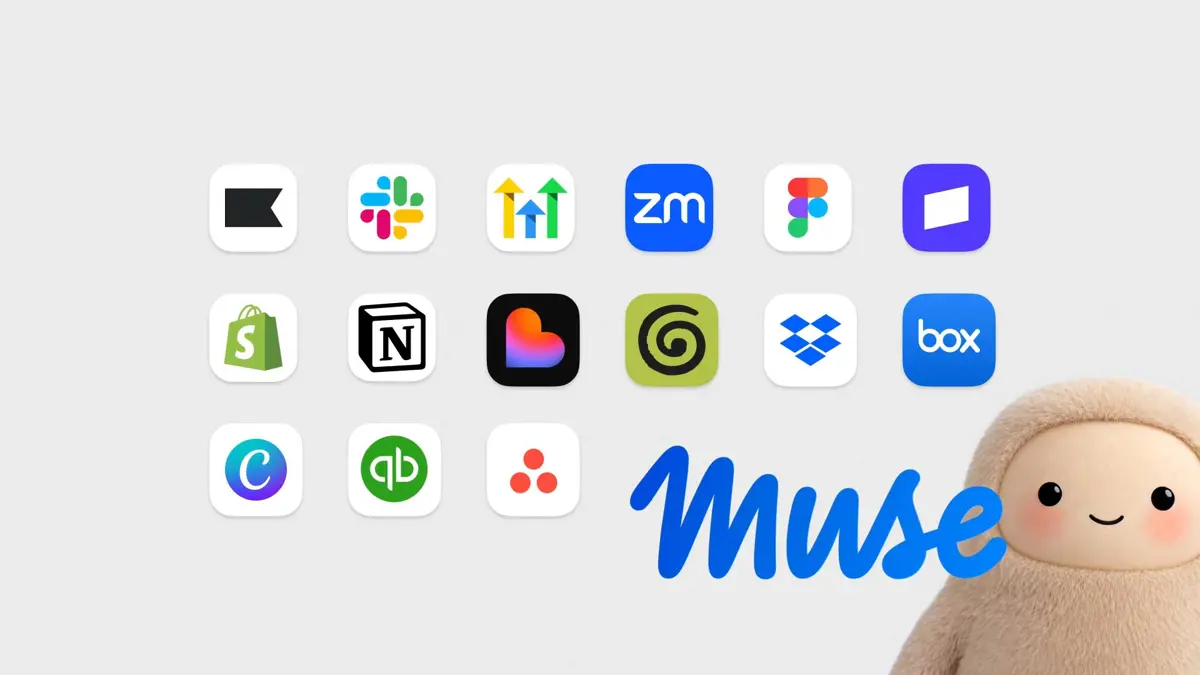
Muse is moving beyond personal tasks with integrations for business tools including Shopify, QuickBooks, Stripe and Canva.

Meta is expanding its Muse AI agent to small businesses, moving the assistant beyond personal tasks and into everyday business workflows. The company is adding integrations with business services including Shopify, QuickBooks, Stripe and Canva, giving Muse access to information and tools that small businesses already use.
The expansion comes one day after Meta announced Meta Enterprise Platform, a new business pillar for bringing its AI agents, APIs and developer tools to companies. Muse is part of that broader strategy, but the small-business launch gives the agent a more specific role: helping smaller teams handle operational work without building an AI system from scratch.
What Muse Can Do for Small Businesses
With the new business integrations, Muse can work with information such as storefront data, financial records, customer information and Meta account analytics. The goal is to let a small-business owner ask Muse to work across connected services instead of moving between each application manually.
The integrations include Shopify for commerce, QuickBooks for business finances, Stripe for payments and Canva for creative work. Muse can use connected business information to help with tasks, while actions that publish content, send messages or make purchases require the user's approval.
Muse Moves From Personal Assistant to Business Agent
Muse originally launched as a personal AI agent that could take action across connected apps, including tasks such as sending email and booking travel. Meta's original Muse launch introduced the agent around a secure virtual machine and permissions that let people control which services Muse could access.
Meta has continued expanding Muse's reach across devices and services. The agent recently arrived on iPhone and Mac, while Meta has also added more connectors and plans to bring Muse to its AI glasses. Muse's expansion to iPhone and Mac showed the company was broadening where the agent could operate before this move into business workflows.
Small Businesses Become a Key Muse Use Case
The small-business expansion also fits with Meta's broader push to make Muse useful for organizations. The company announced Meta Enterprise Platform and its dedicated enterprise AI business on September 28, naming former MongoDB CEO CJ Desai to lead the new initiative.
Meta has also been building a developer ecosystem around its AI technology. The Meta Model API and Muse Spark give developers another way to build with Meta's models, while Muse itself is becoming the user-facing layer that can act across connected business tools.
That creates a broader path for Meta's AI strategy: small businesses can use Muse directly, developers can build with Meta's APIs, and larger organizations can use the Enterprise Platform. Meta is therefore extending the same agent technology across different business sizes and levels of technical involvement.
Businesses Still Control Sensitive Actions
Muse's business capabilities involve access to sensitive operational information, including financial and customer data. Meta says users remain in control of actions that affect their business, with approval required before certain actions such as publishing, messaging or making purchases.
The approach follows the permission model Meta established when Muse launched. The company says people choose which apps Muse can connect to and how much access it receives, with confirmation required for sensitive actions. That control becomes particularly important as an agent moves from personal tasks into business operations.
The small-business expansion makes Muse more than a personal productivity experiment. It gives Meta a direct way to put its agent technology into commerce, finance, marketing and other day-to-day workflows used by smaller companies, while the broader Enterprise Platform provides a path toward larger business deployments.