Meta Muse Charm Turns Its AI Agent Into a Pocket Companion
The tiny device gives Meta's personal AI agent a physical interface for real-time voice interaction beyond the phone.

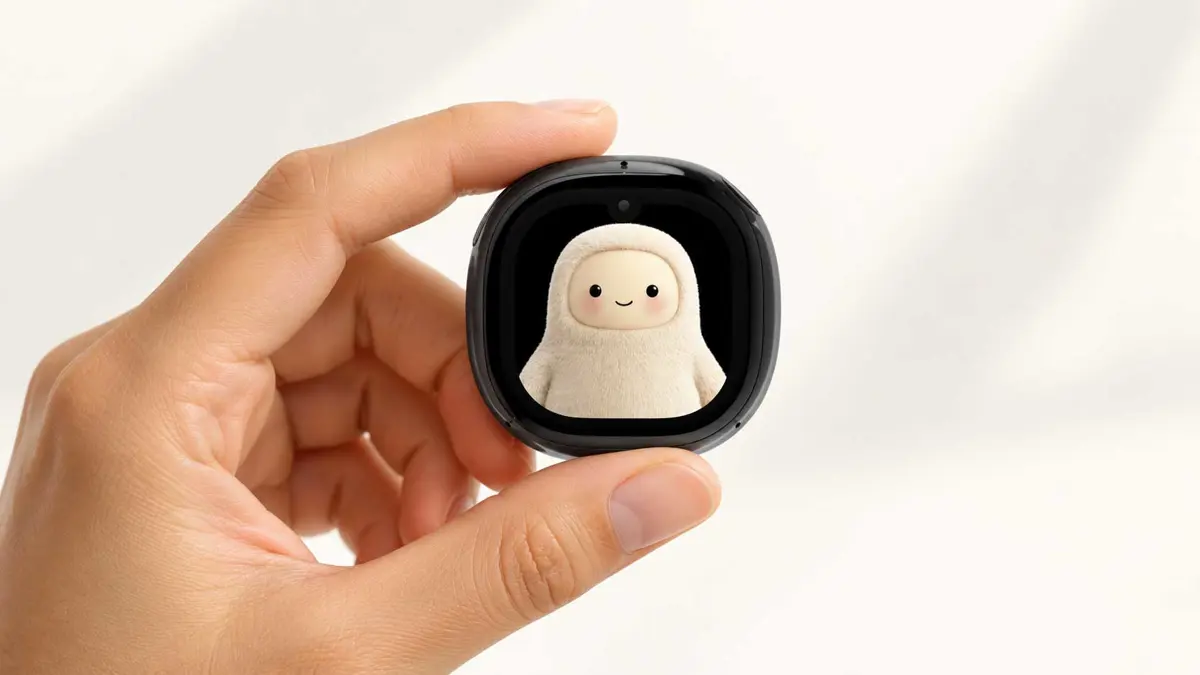
Meta is turning its Muse personal AI agent into something that can travel outside a phone. The company has introduced Muse Charm, a pocket-sized device built so people can talk to and interact with Muse through a real-time voice model.
The important part is what Muse Charm is not. Meta is not presenting it as a completely separate AI assistant. It is a physical way to reach the Muse agent, which already works across Meta's app experiences and can carry out tasks such as sending email, booking travel, and working through connected services.
That makes the Charm less about putting another chatbot into a gadget and more about changing how an existing AI agent is accessed.
What Is Muse Charm?
Muse Charm is a small device designed to bring Meta's personal AI agent into a pocket-sized form. Meta says it combines Muse with a state-of-the-art real-time voice model, letting people talk and interact with their agent without relying on a phone screen as the primary interface.
Meta's original Muse launch explains the software behind the device. Muse runs through a dedicated Muse Secure VM and can work on a person's behalf across apps and services, including tasks such as email and travel. That background makes the Charm easier to understand: the device is another access point to the agent rather than a replacement for the agent itself.
Saganote's earlier coverage of Meta Muse's personal AI agent and its Secure VM explains how that underlying system is designed to work.
How Does Muse Charm Work?
Meta's official announcement is intentionally brief on hardware details. The company says Muse Charm is built for talking and interacting with Muse and fits in a pocket. More information is promised later this year.
A demonstration reported by TechCrunch gives a clearer picture of the intended interaction. Mark Zuckerberg showed a small device that could be carried in a pocket or attached to a keychain. A fingerprint sensor on the device can start a conversation with Muse without first unlocking a phone or opening an app.
- Carry the device in a pocket or attach it to a keychain.
- Use its physical control to start an interaction.
- Talk to Muse through the real-time voice interface.
- Let the Muse agent handle supported questions and tasks through its existing capabilities.
Meta has not published a complete Muse Charm user manual, final specifications, pricing, battery information, or all of the device's privacy controls. The interaction model above is based on Meta's announcement and the public demonstration reported at Connect.
What Can Muse Charm Actually Do?
Muse Charm's usefulness depends largely on what the Muse agent can already do. Meta says Muse can work on tasks instead of only answering questions, and Connect added more connectors for shopping, payments, travel, productivity, and other services.
That means the Charm can be viewed as a quick voice entry point into the wider Muse system. The device itself does not need to contain every service or task capability. It needs to provide a convenient way to reach the agent that handles those actions.
For context, Meta Muse on iPhone and Mac shows how the same agent is already moving across traditional computing devices, while Muse Voice Dictation for Mac shows another example of Meta using voice as a direct interface to its AI.
Why Does Meta Want Muse on a Keychain?
The keychain-sized approach changes where an AI assistant can live. A phone stays in a pocket or bag but usually requires a screen and an app. AI glasses can provide hands-free access, but they have to be worn.
Muse Charm is designed to stay physically close without being worn on the face. That makes it a different interface for the same agent: small enough to carry, available through voice, and separate from the main screen of a smartphone.
Meta is pursuing several versions of this idea at once. The company is bringing Muse to its AI glasses in the coming months and says it will have more than 100 AI glasses options across Ray-Ban, Oakley, and Meta Glasses by the end of 2026.
Saganote has also covered Meta's camera-free AI glasses and the privacy questions around that design, which provides useful context for why a pocket-based interface represents a different hardware approach.
Muse Charm Is One Piece of a Larger Muse Platform
| Part | What it does |
|---|---|
| Muse | Meta's personal AI agent for conversations and supported tasks |
| Muse Charm | Pocket-sized physical interface for talking to Muse |
| AI glasses | Hands-free interface that connects Muse with the wearer's surroundings |
| Connectors | Services that let Muse shop, communicate, work, travel, and complete supported actions |
This separation matters because Meta is building Muse as a service that can move between interfaces. The agent is the software layer, while phones, Macs, glasses, and Charm provide different ways to reach it.
Meta is also expanding the developer side of its AI ecosystem. Saganote's coverage of Meta's Muse Spark 1.1 developer API provides context for how Muse-related technology is moving beyond a single consumer interface.
Other Muse products show the same naming pattern, even when they target different jobs. Meta's Muse Code coding agent is a separate Muse-branded product for software development, while the Muse personal agent is the system that Charm is designed to connect to.
What About Privacy?
Privacy is one of the major details that remains unfinished for Muse Charm itself.
Meta says Muse users can choose which apps the agent connects to, change or disconnect access, opt out of interactions being used to train Meta's AI models, and tell Muse to forget specific information. The company also says Muse uses a dedicated secure virtual machine for the agent and connected data.
Those controls describe the Muse platform, but they do not answer every Charm-specific question. Meta has not yet published the complete details for microphone behavior, when the device listens, how much processing happens locally, what data is retained, or how the hardware can be reset.
Those details will matter because the value of a voice-first AI device depends on making access convenient without making its behavior opaque.
When Will Muse Charm Be Available?
Meta's official Connect announcement says more details about Muse Charm will be shared later this year.
TechCrunch reported that Zuckerberg said the device was not ready to ship yet because the team still needed to finalize its components. He indicated that Meta was targeting the holiday period in December.
That means several important product questions are still open, including price, exact availability, final hardware specifications, battery life, controls, and the full privacy model.
The Bigger Idea Behind Muse Charm
Muse Charm is more significant as an interface concept than as a tiny piece of hardware.
Meta is testing whether a personal AI agent can follow a person across different surfaces instead of living inside one app. The phone provides a screen, the Mac provides a larger workspace, AI glasses provide hands-free access, and Charm provides a small voice-first device that can remain physically close.
That makes the Charm part of a larger shift in how Meta is positioning Muse. The agent becomes the consistent layer, while the hardware becomes the way a person reaches it.
For now, Muse Charm remains a preview rather than a fully specified product. Meta has shown the basic purpose and interaction model, but the final test will come when the company publishes the remaining hardware, pricing, availability, and privacy details.