#AI Engineering
 AI
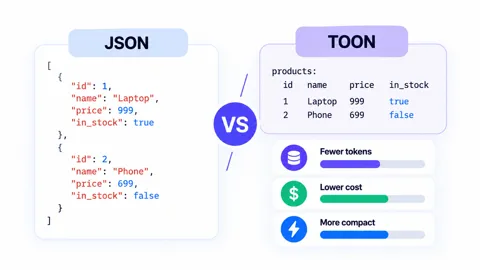
JSON vs TOON: Token Usage, Cost, and Key Differences
JSON vs TOON explained: compare token usage, API cost, accuracy, and compatibility, then learn when TOON is worth testing for LLM prompts.
 AI
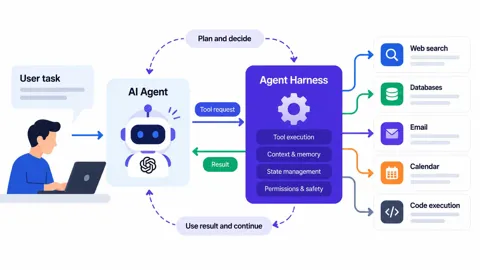
What Is an AI Agent Harness? How It Works and Why It Matters
An AI agent harness connects a model to tools, context, execution, and safety controls. Here is how it works and why reliable agents need it.
 AI
Claude Haiku 5.5 Is Fast and Cheap. That Matters More Than Its Benchmarks
Claude Haiku 5.5 is built to make routing, summaries, subagents, browser tasks, and high-volume agent work cheap enough to run at scale.
 AI
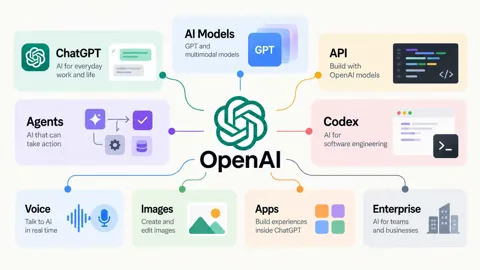
What Does OpenAI Do? A Complete Guide to ChatGPT, Models, APIs, Agents, and Codex
What Does OpenAI Do? This guide explains how OpenAI's models, ChatGPT, APIs, agents, Codex, tools, voice, images, and apps fit together for readers.
 AI
Google Launches Gemini 4 Argon With a 1 Million-Token Output Limit
Gemini 4 Argon raises Google’s output limit from 64K to 1 million tokens for long coding, enterprise, and cybersecurity workflows in its first rollout.
 AI
OpenAI Launches GPT-6.1 Sol With Near-Astra Performance at Lower Cost
OpenAI launched GPT-6.1 Sol as a cheaper model for coding and professional work, with near-Astra performance and API pricing set far below GPT-6 Astra.
 AI
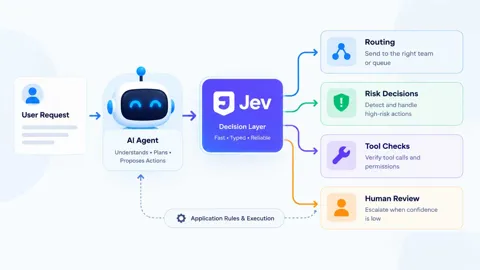
How to Build AI Agents With Jev: Routing, Risk, and Tool Checks
Learn how to build AI agents with Jev by separating agent reasoning, bounded decisions, application rules, tool checks, and human review in production.
 AI
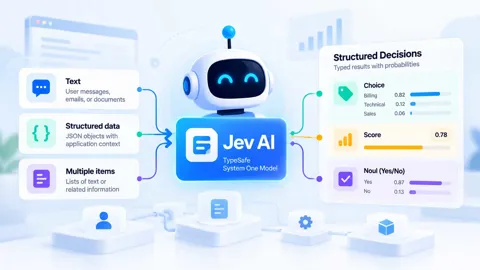
How to Use Jev AI: A Practical Guide for Developers and AI Agents
Learn how to use Jev AI in a real application, from defining a decision and preparing state to calling the API and handling structured results safely.
 AI
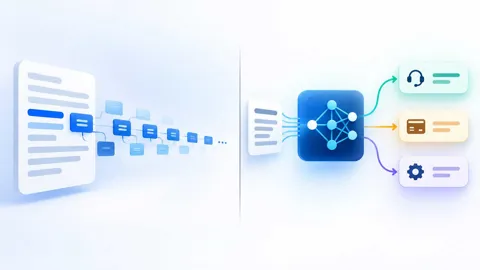
What Is Jev AI? How TypeSafe’s System One Decision Model Works
Learn what Jev AI is, how TypeSafe’s System One model works, and how typed decisions differ from generative LLM outputs in AI applications today.
 AI
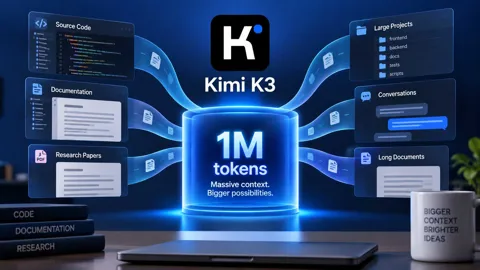
Why Decision Models Like Jev Can Be Much Faster Than LLMs
Decision models answer bounded software questions without generating text. Jev shows how that can reduce latency and simplify routing, scoring, and triage.
 AI
Kimi K3 Context Window Explained: What Can It Actually Handle?
Kimi K3 supports up to 1M tokens of context on eligible plans. Here is what that limit means for codebases, documents, API requests, K3-256K, and Kimi Code.
 AI
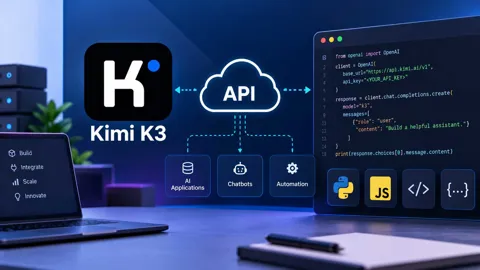
Kimi K3 API: How to Get Started and Use It in Your Apps
Learn how to set up the Kimi K3 API, create an API key, choose the right endpoint, send a first request, and avoid common authentication and model errors.